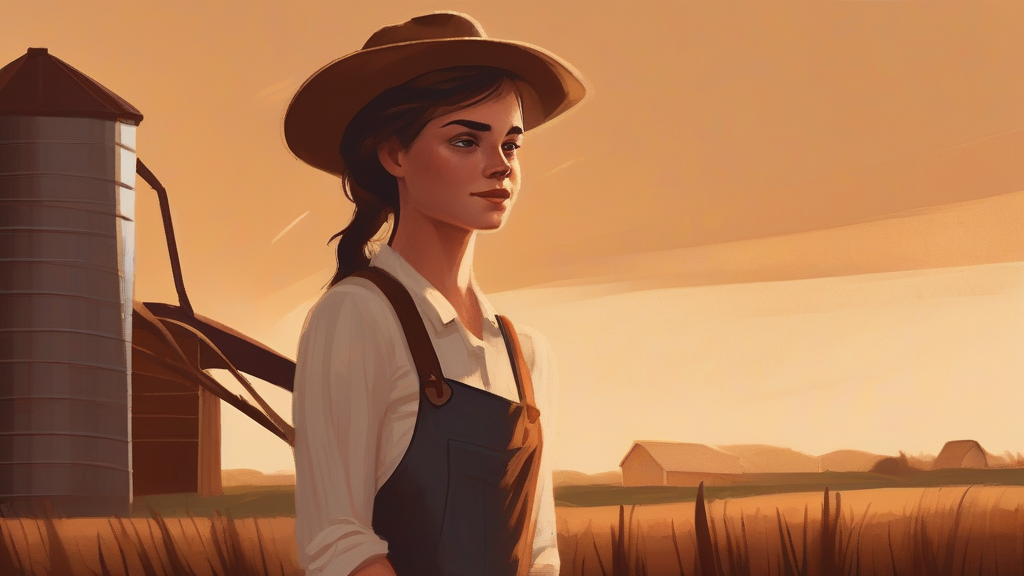
What does farmerette mean?
A farmerette is a woman who farms — someone who owns, manages, or works on farmland. The term emerged in the late nineteenth century as part of a broader fashion for feminine '-ette' derivatives and rose to prominence during the First World War, when the Women's Land Army in Britain and its American counterpart recruited thousands of women to replace farm labourers called up for military service. In that era the farmerette became a patriotic emblem: photographs showed her in breeches or overalls, driving tractors and bringing in harvests once thought to be exclusively men's work. Although the word was never derogatory, it has largely fallen out of use, since contemporary English treats farming as gender-neutral and simply calls women in agriculture farmers. Encountering 'farmerette' today usually signals either a historical text about the land army movement or a deliberately old-fashioned style, making it a small but telling window onto how language encodes changing ideas about women's work.
nounA woman who farms or works on a farm; a female farmer.
- A woman who owns, manages, or labours on a farm.
- (Historical) A member of the wartime women's land armies, especially in the US during World War I.
"During the war years, thousands of farmerettes took over the fields as men left for the front."
"The prize for best dairy herd went to a farmerette from rural Vermont."
"Recruiting posters urged young women to enlist as farmerettes and help harvest the nation's crops."
Standard plural; used mainly in historical accounts of the wartime land armies.
"Farmerettes worked long hours through the harvest season."
When America entered World War I, the 'farmerette' became a national icon — women in overalls and wide-brimmed hats who kept the nation fed while its farmers fought overseas.
Reviewed by Deb Chak, Editor. AI-assisted content curated by RJS Tech Solutions LLP.
Etymology of farmerette
Farmerette combines 'farmer' — ultimately from Old French 'fermier', from Medieval Latin 'firmarius', one who holds land at a fixed rent — with the French-derived suffix '-ette', used to form feminine or diminutive nouns. The '-ette' suffix flourished in English around the turn of the twentieth century, producing words such as suffragette and bachelorette. Farmerette is attested from roughly this period and gained particular currency during the First World War through the women's land army movement on both sides of the Atlantic.
How farmerette is actually used
The word is somewhat dated and now rarely used; modern English simply uses 'farmer' for any gender. It carries historical connotations of the WWI-era women's land army movement and can sound quaint or period-specific today.
Easily confused with farmerette
'Farmer' refers to anyone who runs or works a farm regardless of gender, while 'farmerette' specifically denotes a woman farmer.