What does farmworker mean?
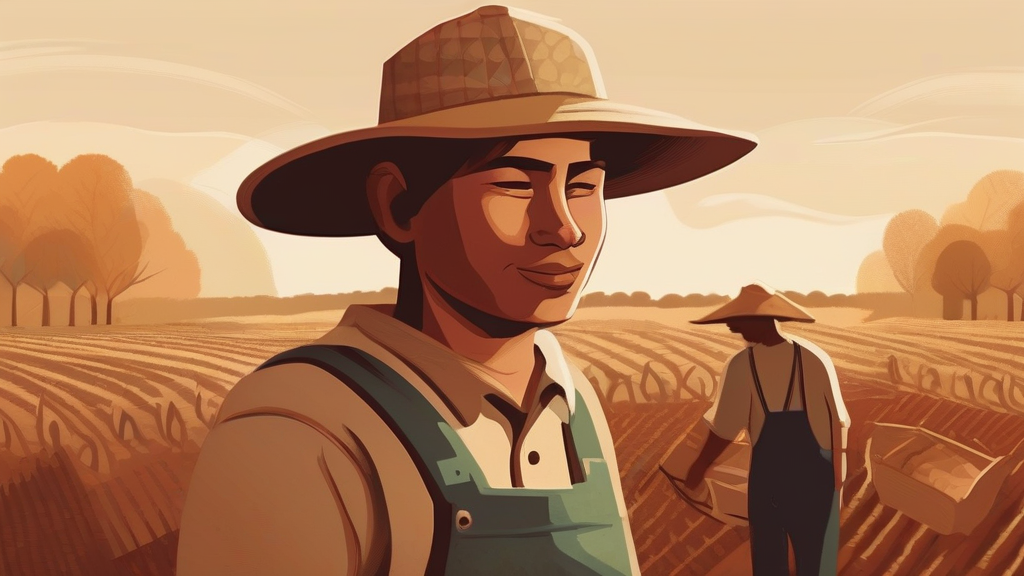
A farmworker is a person employed to carry out manual work on a farm, including tasks such as planting, irrigating, harvesting crops, and caring for livestock. The term describes wage-earning agricultural labourers rather than those who own or manage farms, a distinction that matters in legal, economic, and advocacy contexts. Farmworkers are often discussed in relation to seasonal migration, working conditions, wages, and food supply chains, making the word central to debates about labour rights and agriculture. It is a neutral, standard term in both British and American English, widely used in news reporting, government statistics, and humanitarian campaigns. Related terms include "farmhand", which traditionally suggests a worker who lives on the farm, and "field hand", which emphasises outdoor crop work. Because modern food systems depend heavily on hired agricultural labour, understanding this word means understanding the people whose hands bring produce from field to market.
nounA person employed to work on a farm, typically performing manual labour such as planting, harvesting, or tending livestock.
- A person employed to perform manual work on a farm, such as cultivating crops, harvesting, or tending animals.
"The farmworker rose before dawn to bring in the harvest before the midday heat."
"The new visa programme was designed to address the chronic shortage of seasonal farmworkers."
"As a young farmworker, she spent long summers picking fruit in the Yakima Valley."
Standard regular plural. When referring to the group's interests collectively, the phrase "farmworkers' rights" (with possessive plural) is common in legal and advocacy writing.
"Thousands of farmworkers travel with the harvest season each year."
In the US alone, there are estimated to be over two million farmworkers — yet the word itself only became common in the twentieth century as agriculture shifted from family farms to hired labour.
Reviewed by Deb Chak, Editor. AI-assisted content curated by RJS Tech Solutions LLP.
Etymology of farmworker
The word "farmworker" is a compound formed from "farm" and "worker", combining two native English elements. "Farm" derives from Old French "ferme", ultimately from Latin "firmus", meaning fixed or settled — originally referring to a fixed payment or lease before evolving to mean leased land and then the land itself. "Worker" derives from the Old English verb "wyrcan" (to work). The compound emerged as agriculture became increasingly reliant on hired labour, becoming widespread in the nineteenth and twentieth centuries.
How farmworker is actually used
"Farmworker" is a neutral, standard term used in journalism, law, and advocacy contexts, and is the preferred term among labour-rights organisations. It carries no particular connotation of class beyond indicating wage-based agricultural employment. The term "farmhand" overlaps but traditionally implies someone living on the farm where they work; "farmworker" makes no such implication. In British English, "farm worker" (two words) is also common.
Easily confused with farmworker
A farmer owns or manages a farm and bears responsibility for its operations, while a farmworker is an employee who performs labour on the farm.