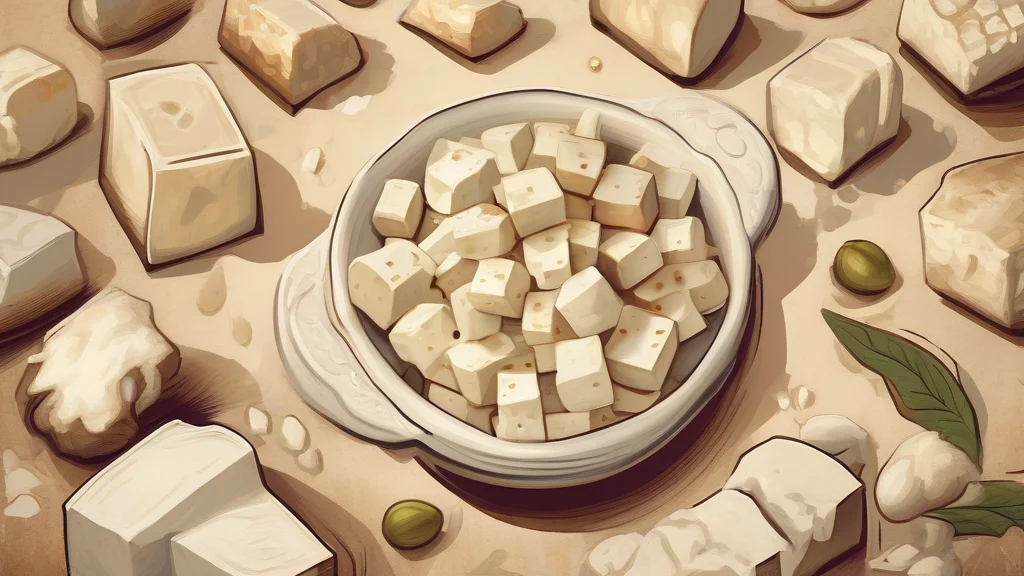
What does feta mean?
Feta is a white, brined cheese of Greek origin, traditionally made from sheep's milk or a blend of sheep's and goat's milk. It has a firm yet crumbly texture and a distinctive tangy, salty flavour shaped by its time spent in brine. A cornerstone of Greek cuisine, it appears most famously in the classic Greek salad alongside tomatoes, cucumber, and olives, but it is equally at home baked in pastries such as spanakopita, scattered over roasted vegetables, or whisked into dips. The word itself entered English from the Greek 'feta', borrowed from the Italian 'fetta', meaning 'a slice', a nod to how the cheese is cut for serving. Within the European Union the name is protected, so genuine feta must come from designated Greek regions and follow traditional production methods. Elsewhere, comparable white brined cheeses are often marketed under similar names, though purists reserve the word for the Greek original.
nounA white, crumbly Greek cheese made from sheep's milk, or a mixture of sheep's and goat's milk, typically stored in brine and noted for its tangy, salty flavour.
- A brined white curd cheese of Greek origin, made chiefly from sheep's milk, with a tangy, salty taste and crumbly texture.
"She scattered crumbled feta over the watermelon salad."
"The chef topped the roasted beets with olive oil and feta."
"For a quick lunch, I tossed pasta with cherry tomatoes, olives, and cubes of feta."
Used mainly when distinguishing different types or servings of the cheese, e.g. comparing a French-style and a Bulgarian-style product.
"The tasting board featured three different fetas from across the Balkans."
Since 2002, 'feta' has been a legally protected term in the EU — only cheese from specific Greek regions, made by traditional methods, may bear its name.
Reviewed by Deb Chak, Editor. AI-assisted content curated by RJS Tech Solutions LLP.
Etymology of feta
The word 'feta' comes from modern Greek, where it was borrowed from the Italian 'fetta', meaning 'a slice' — a reference to the practice of cutting slabs of the cheese before packing it into barrels or tins of brine. The Italian root ultimately traces back to Latin 'findere', meaning 'to split'. It entered English usage in the nineteenth and twentieth centuries as Greek cheese became widely exported.
How feta is actually used
In the European Union, 'feta' is a protected designation of origin, so cheeses sold under that name must be produced in defined regions of Greece from sheep's milk or a sheep's-and-goat's-milk blend; elsewhere, similar white brined cheeses are often labelled simply 'feta-style' or sold under other names.