
What does fiesta mean?
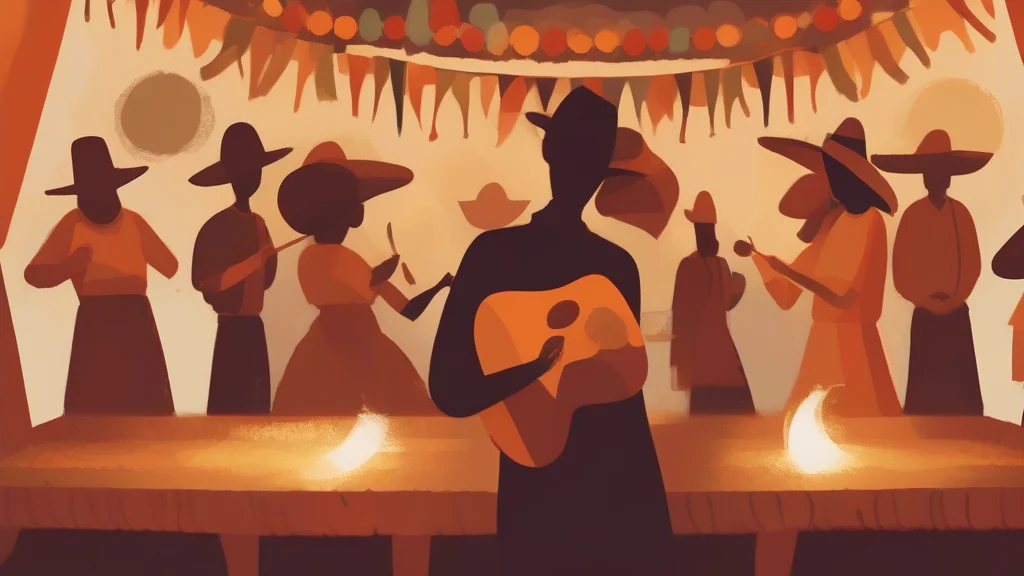
A fiesta is a festival or celebration, originally denoting the religious feast days observed in Spain and Latin America in honor of patron saints. In those contexts, a fiesta typically involves processions, music, dancing, traditional dress, and communal feasting, often drawing entire towns into days of public revelry. In modern English, the word has broadened to describe any lively celebration or party, from a neighborhood street fair to a themed gathering with food and decorations. Borrowed from Spanish, which took it from the Latin festum meaning 'feast' or 'festival', fiesta shares its origins with familiar English words like feast, festival, and festive. It carries warm connotations of community, joy, and color, making it a vivid alternative to plainer words like party or event. Because it evokes the rich festival traditions of the Hispanic world, it is especially fitting for celebrations with music, dance, and shared food at their heart.
nounA fiesta is a festival or religious celebration, especially one taking place in Spain or Latin America, marked by feasting, processions, music, and dancing. More generally, it can refer to any lively celebration or party.
- A religious festival or saint's day celebration, especially in Spain or Latin America.
- Any lively celebration, carnival, or party.
"The whole town turned out for the annual fiesta, with parades, flamenco dancing, and fireworks lasting well past midnight."
"The village fiesta honors its patron saint with a procession through the streets."
"The office threw a summer fiesta complete with piñatas and margaritas."
Standard English plural, formed regularly with -s.
"The region is famous for its colorful fiestas held throughout the spring and summer."
Every 'fiesta' you've ever attended traces back to the Latin word for a feast — because in the Roman world, nothing said 'holiday' quite like a banquet.
Reviewed by Deb Chak, Editor. AI-assisted content curated by RJS Tech Solutions LLP.
Etymology of fiesta
Fiesta entered English from Spanish in the mid-nineteenth century, borrowed during growing Anglo-American contact with Mexico and Spain. The Spanish word derives directly from Latin festum, meaning 'feast' or 'festival day', which also gave rise to English words such as feast, festival, and festivity through Old French. Its earliest English uses referred to the religious festivals of Spanish-speaking countries, and only later did the broader sense of any lively celebration take hold.
How fiesta is actually used
Fiesta is a fully naturalized English borrowing and is used neutrally in both formal and informal contexts. When referring specifically to Spanish or Latin American religious festivals it retains cultural specificity; in casual American usage it often denotes any festive party, sometimes playfully. The word is not capitalized unless part of a proper name such as 'Fiesta San Antonio'.
Easily confused with fiesta
A siesta is an afternoon nap or rest (from Latin sexta, 'sixth hour'), whereas a fiesta is a festive celebration; the two Spanish loanwords sound similar but mean very different things.