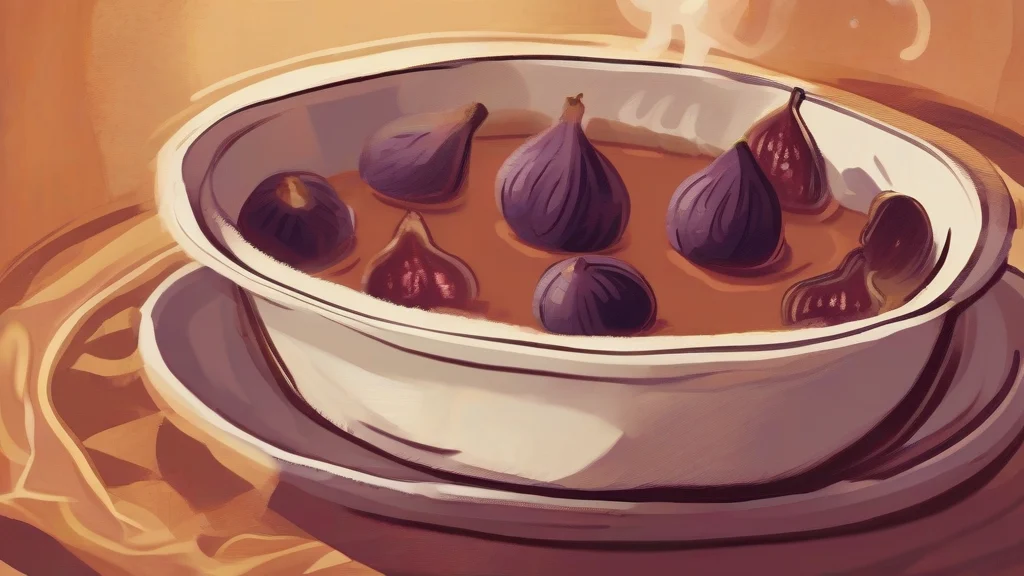
What does figgy mean?
Figgy is an informal adjective meaning made with, containing, or resembling figs. It survives almost entirely within a small set of traditional dish names, most famously figgy pudding — the steamed fruit-laden dessert demanded so memorably in the Christmas carol 'We Wish You a Merry Christmas.' In parts of Britain and in Newfoundland, where the related figgy duff remains a holiday staple, the word took on a broader sense: historical dialect used 'figs' loosely for raisins and other dried fruit, so a 'figgy' dessert was often richer in raisins than in actual figs. Because of these culinary ties, the word evokes warmth, festivity, and old-fashioned celebration rather than everyday description. Outside cooking contexts it is rare and can sound quaint or playful, which makes it useful precisely when a writer wants a touch of seasonal charm.
adjectiveContaining, made with, or resembling figs. Most familiar from the Christmas carol line "now bring us some figgy pudding," where it describes a pudding rich in dried fruit.
- Made with or containing figs (as in figgy pudding).
- (Dialectal, especially British and Newfoundland) Made with or containing raisins or other dried fruit, as in figgy duff.
"The holiday menu featured a dense figgy pudding flambéed with brandy."
"Grandmother's figgy pudding had been steaming since early morning."
"In Newfoundland kitchens, figgy duff traditionally closed out Christmas dinner."
The 'figgy' of the famous Christmas carol may never have contained a single fig — in old British dialect, 'figs' could mean any dried fruit, especially raisins.
Reviewed by Deb Chak, Editor. AI-assisted content curated by RJS Tech Solutions LLP.
Etymology of figgy
Figgy is a straightforward derivative of fig plus the adjectival suffix -y. The underlying word fig entered Middle English from Old French figue, which itself descends from Latin ficus, the word for the fig tree and its fruit. The same Latin root surfaces in sycamore — literally the 'fig-mulberry' — and, via Greek, in sycophant, whose ancient sense has been linked to 'fig-showers' or informers. Figgy as a descriptive adjective is attested from at least the early modern period, with its fame secured by the Christmas carol tradition.
Related word forms
How figgy is actually used
An informal, largely fixed-use word: outside a handful of established dishes like figgy pudding and figgy duff, it rarely appears in modern English. It carries warm, festive, old-fashioned connotations thanks to its association with Christmas tradition.
Easily confused with figgy
Despite the carol, traditional British figgy pudding is a steamed dish rich in dried fruit generally, and in some regions 'figgy' historically referred to raisins rather than actual figs.