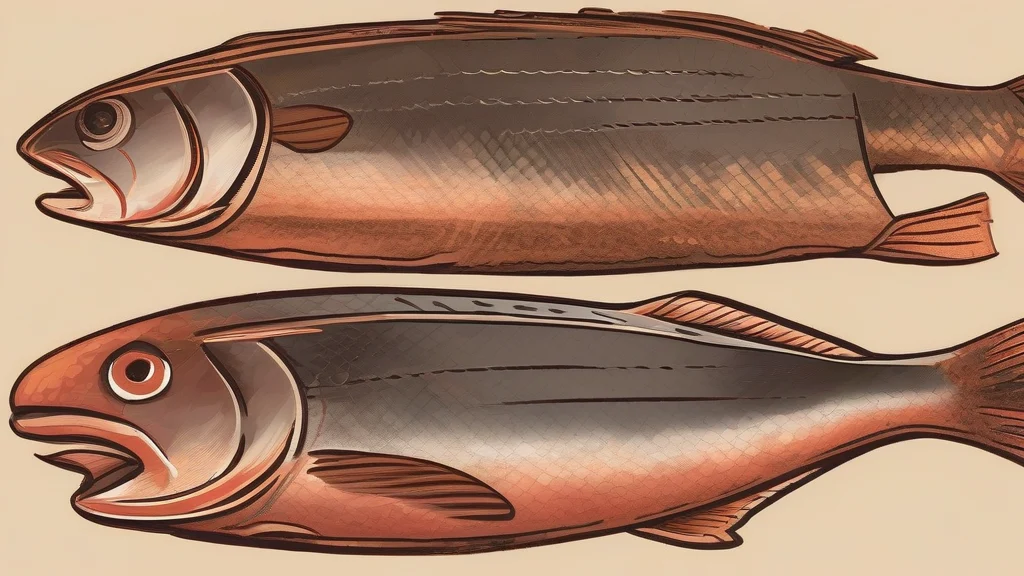
What does filleting mean?
Filleting is the act or skill of cutting flesh — most often fish, sometimes meat — into fillets, which are boneless, flat pieces taken from the side of the animal. It is both a practical kitchen technique and, for professionals, a mark of craftsmanship: a good filleting knife and a steady hand yield clean slices with minimal waste. Beyond the kitchen, the word also denotes the use of thin strips of material, such as wood or metal trim, in joinery and construction. Derived from the noun 'fillet', which ultimately comes from the Latin 'filum' meaning thread via Old French 'filet', the word carries connotations of precision, delicacy, and care. Whether describing a chef's swift work behind a market counter or a craftsman's finishing detail, filleting suggests an exact, practiced hand at work.
The action or process of cutting fish or meat into fillets by removing the bones; also, the use of thin strips of material for trimming or binding.
"Filleting requires a sharp, flexible blade and a confident hand."
The culinary sense is by far the most common in modern usage.
Present participle of the verb 'fillet': to remove the bones from and cut fish or meat into fillets.
"She spent the morning filleting the day's catch at the harbour market."
Rarely used in the plural; the word normally appears as an uncountable mass noun referring to the activity or material.
"Various filletings of timber were fitted around the frame."
A skilled cook can fillet a whole salmon in under three minutes — a cut so precise that the word traces back to Latin 'filum', meaning thread.
Reviewed by Deb Chak, Editor. AI-assisted content curated by RJS Tech Solutions LLP.
Etymology of filleting
Filleting derives from 'fillet', borrowed from Old French 'filet', a diminutive of 'fil' meaning thread, which itself descends from the Latin 'filum'. The culinary sense — cutting flesh into boneless strips — developed from the notion of thin, delicate pieces, while the craft sense refers to narrow strips of material used in joinery and bookbinding. Related words sharing the thread root include 'file', 'profile', and 'filigree'.
Related word forms
How filleting is actually used
In cooking contexts, British English tends to pronounce the underlying word 'fillet' as /ˈfɪlɪt/, while American English commonly uses /fɪˈleɪ/, borrowed from French 'filet'. The gerund/noun 'filleting' follows the pronunciation of the verb it derives from. The craft/construction sense ('thin strip') is more technical and less common in everyday speech.
Easily confused with filleting
'Filling' refers to material or food placed inside something (as in a tooth filling or pie filling), whereas 'filleting' refers to the act of slicing fish or meat into boneless fillets.