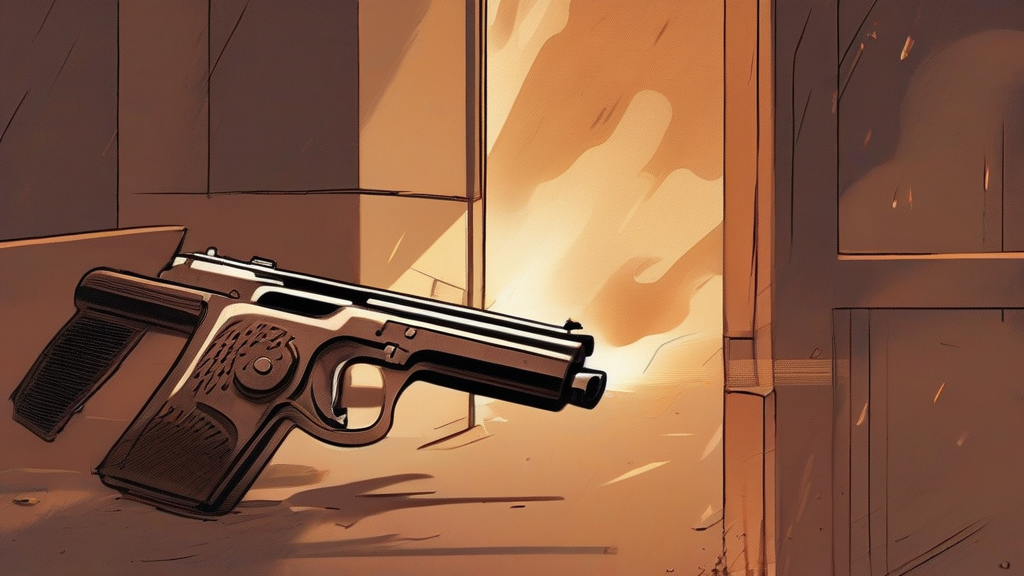
What does firearm mean?
A firearm is any portable weapon designed to discharge a projectile through a barrel using the force of an explosive charge, typically gunpowder. The category covers pistols, revolvers, rifles, shotguns, and machine guns, but generally excludes heavy artillery such as cannons. The word combines 'fire', referring to the explosive ignition that drives the projectile, with 'arm', meaning weapon, reflecting its origins in early modern warfare. In modern usage, 'firearm' tends to appear in formal and technical settings — police reports, legislation, licensing documents, and news coverage — where it conveys precision and neutrality compared with the more casual term 'gun'. Legal definitions of what counts as a firearm vary considerably between jurisdictions, affecting issues of ownership, licensing, and criminal liability. Because firearms sit at the centre of debates on public safety, hunting, sport shooting, and personal defence, the word is both practically important and culturally loaded in many English-speaking countries.
nounA weapon, such as a pistol, rifle, or shotgun, that uses gunpowder or another explosive charge to propel a projectile from a metal barrel.
- Any portable gun that propels a projectile by means of an explosive charge, including pistols, revolvers, rifles, shotguns, and machine guns.
"The officers were required to register every firearm they carried."
"He was charged with unlawful possession of a firearm."
"Museum curators displayed flintlock firearms from the eighteenth century."
Standard countable noun; the plural is used when referring to multiple weapons or to the category collectively, as in 'the trade in illegal firearms'.
"All firearms must be declared at the checkpoint."
The word 'firearm' literally fuses two medieval concepts — 'fire' (the powder) and 'arm' (the weapon) — a linguistic fossil of the age when gunpowder transformed warfare.
Reviewed by Deb Chak, Editor. AI-assisted content curated by RJS Tech Solutions LLP.
Etymology of firearm
Firearm is a compound of two older English words: 'fire' (from Old English fyr) and 'arm' (meaning weapon, from Latin armare, to equip with arms), merged during the sixteenth and seventeenth centuries as handheld guns became common on European battlefields. The Latin root behind 'arm' also gives us related terms such as armament, armor, and army, making these true linguistic cousins of the modern compound. The name preserves a literal description of how the earliest weapons worked — a charge set alight to drive a ball down a barrel.
How firearm is actually used
In legal, journalistic, and everyday contexts, 'firearm' carries a more formal, neutral register than 'gun', which is broader and more casual. It typically refers to portable guns only, excluding artillery such as cannons. In law enforcement and legislation, the term often has precise statutory definitions that vary by jurisdiction.
Easily confused with firearm
A firearm is a projectile weapon, while the forearm is the part of the arm between the elbow and wrist.
A firearm is a weapon that fires shots, whereas a firestorm is a vast, intense fire caused by bombing or other disaster.