What does fletching mean?
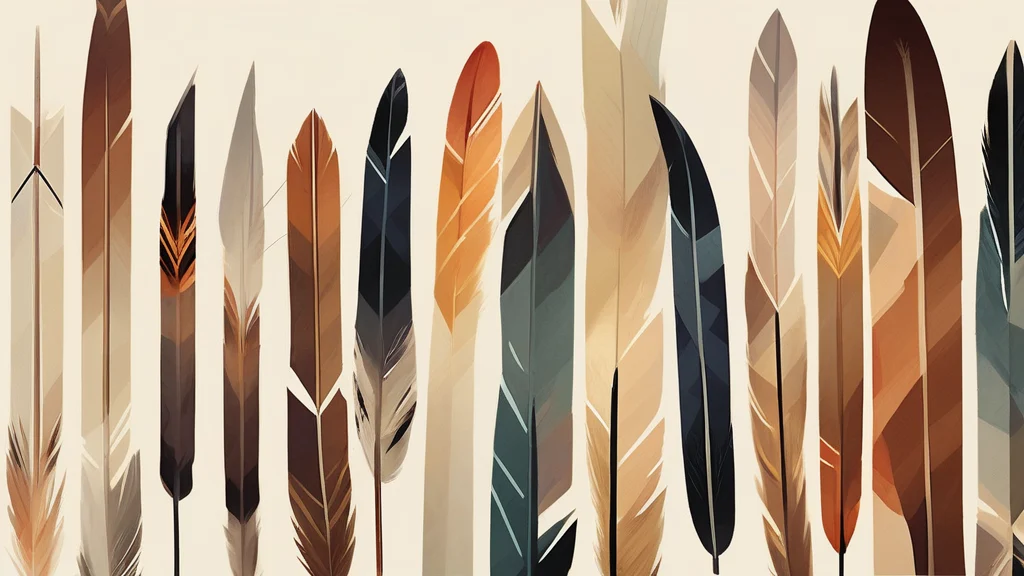
Fletching is the set of feathers or plastic vanes fixed near the back end of an arrow — and by extension darts and bolts — to stabilize it in flight. By creating drag at the tail of the projectile, the fletching keeps it flying point-forward and corrects minor wobbles, dramatically improving accuracy. The term also covers the craft of attaching this material, and in modern archery it typically refers to three equally spaced vanes glued into slots on the arrow shaft, often using a tool called a fletching jig. Traditional designs use natural feathers, most commonly from turkeys, while contemporary arrows frequently use durable plastic vanes. Though primarily technical terminology among archers, bowhunters, and reenactors, fletching carries rich historical resonance: archaeologists have recovered arrows with surviving fletching from prehistoric sites, showing that this refinement dates back many thousands of years.
nounThe patterned arrangement of feathers or plastic vanes fixed near the end of an arrow to stabilize it in flight; also, the material used for this purpose.
- The feathers or vanes attached near the rear of an arrow (or dart/bolt) to stabilize its flight.
- The craft or process of fitting such feathers or vanes to arrows.
"The archer carefully inspected the fletching before nocking the arrow."
"He replaced a torn piece of fletching after his arrow clipped the target frame."
"Traditional fletching uses turkey feathers trimmed and secured with sinew."
"Fletching" is usually uncountable when referring to the overall arrangement, but "fletchings" appears when counting individual feathers or vanes.
"Two of the fletchings were frayed after a season of heavy practice."
Without its fletching, an arrow would tumble wildly through the air — those three small feathers are what turn a stick into a guided projectile, and they've been doing so for tens of thousands of years.
Reviewed by Deb Chak, Editor. AI-assisted content curated by RJS Tech Solutions LLP.
Etymology of fletching
Fletching derives from Old French "flèche," meaning "arrow," which in turn traces back through Frankish *"fliukka"* to Proto-Germanic origins related to flight. English borrowed both the noun and the occupational name "fletcher" — literally an arrow-maker — from French during the medieval period. A close modern cognate is "flechette," a small steel dart-like projectile whose name preserves the same French root.
Related word forms
How fletching is actually used
Chiefly technical vocabulary within archery, bowhunting, and historical reenactment circles, but readily understood in general contexts involving arrows. Plural form "fletchings" is common when referring to individual pieces of the material.
Easily confused with fletching
"Fetching" means attractive or charming, while "fletching" refers to the stabilizing feathers or vanes fitted to an arrow.