What does fontina mean?
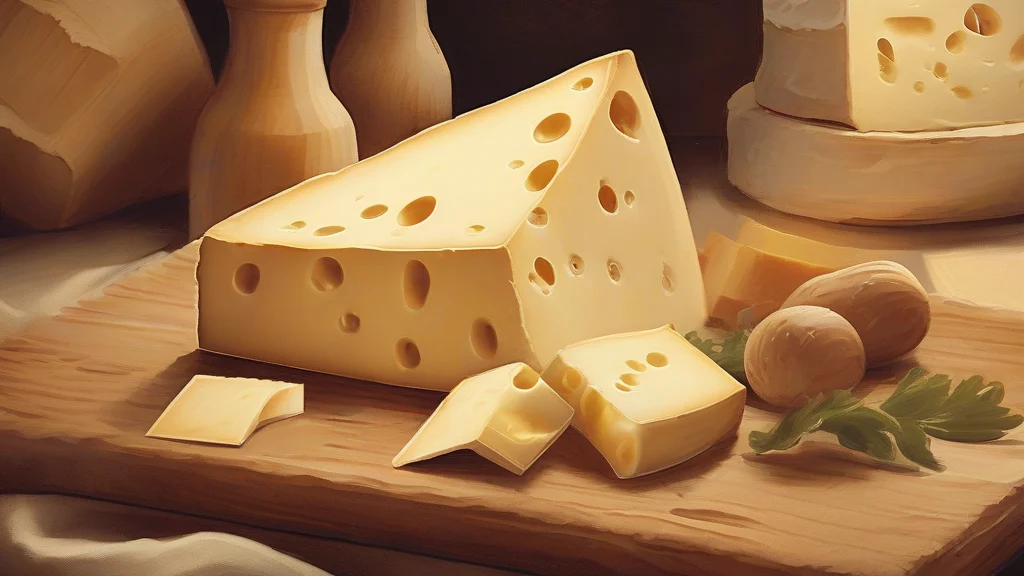
Fontina is a semi-soft Italian cheese made from whole cow's milk in the Alpine Valle d'Aosta region of northwest Italy, where the original protected version, Fontina Val d'Aosta, has been produced for centuries. It has a pale straw-coloured interior dotted with small eyes, a thin rind, and a rich, nutty, gently tangy flavour that deepens with age. Its outstanding melting quality has made it a favourite in cooked dishes: it stars in fonduta, the regional take on fondue, and is widely used in gratins, panini, risottos, and baked pasta. The name is generally thought to derive from the Italian 'fonte', meaning spring or fountain, perhaps referencing the mountain pastures where the cows graze. Outside Italy, similar cheeses inspired by fontina are made under various names, though they tend to be milder. For cooks and food lovers alike, fontina is shorthand for creamy, reliable meltability with genuine Alpine character.
nounA semi-soft Italian cheese made from cow's milk, traditionally produced in the Valle d'Aosta region of northwest Italy, prized for its nutty, buttery flavour and excellent melting properties.
- A semi-soft Italian cow's-milk cheese from the Valle d'Aosta, with a nutty, buttery flavour and renowned melting quality.
"The risotto was finished with a generous handful of melted fontina."
"She layered the crostini with thin slices of fontina and roasted mushrooms."
"For a proper croque monsieur with an Italian twist, nothing melts quite like fontina."
Rare in practice, since the plural would refer to multiple wheels or varieties of the cheese rather than individual units in everyday use.
"The shop stocked both fontinas: the Italian original and the Swedish imitation."
Its name likely comes from the Italian word for spring or fountain — fitting for a cheese so famously melty it practically flows.
Reviewed by Deb Chak, Editor. AI-assisted content curated by RJS Tech Solutions LLP.
Etymology of fontina
Fontina takes its name from Italian, most plausibly from 'fonte' — a spring or source of water — which itself descends from the Latin 'fons, fontis'. The connection is usually explained by reference to the fresh mountain springs and summer pastures of the Valle d'Aosta, where the cheese has long been made. This same Latin root gives English its related words 'fountain', 'font', and 'fount', making them distant cousins of the cheese's name.
How fontina is actually used
Fontina is used almost exclusively in culinary contexts — recipes, menus, and food writing. Cheese labelled 'Fontina Val d'Aosta' (or 'Fontina DOP') refers to the protected original Italian product, while milder imitations are produced elsewhere in Europe and the United States.
Easily confused with fontina
A fontanelle is one of the soft spots on a baby's skull, whereas fontina is an Italian cheese; the words look and sound alike but share only a distant common root.