
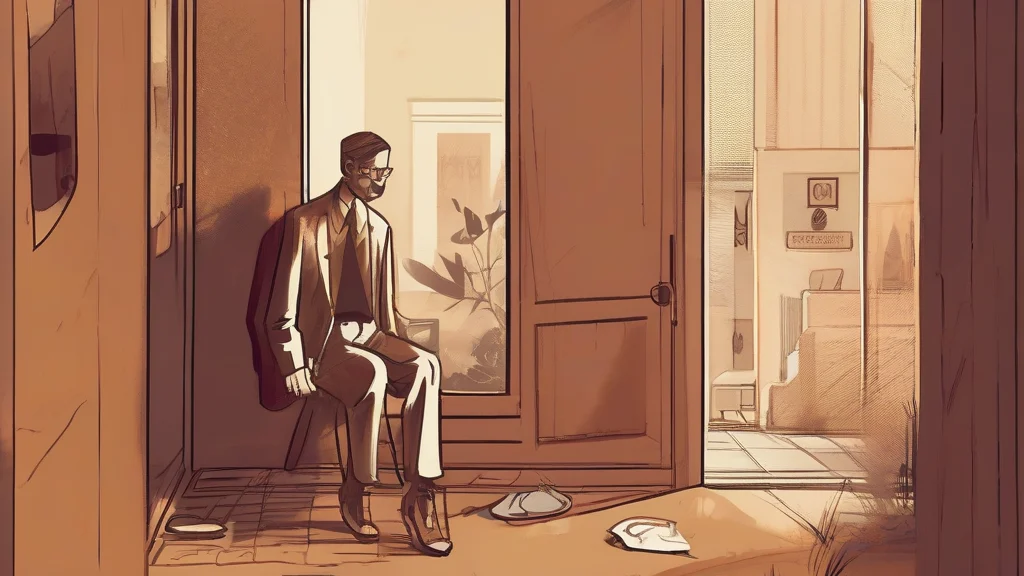
What does foppishness mean?
Foppishness is the quality of being excessively concerned with one's clothing, appearance, and outward manners, particularly in an affected or ostentatious way. The word derives from 'foppish', the adjective describing a 'fop' — a term dating to the seventeenth century for a man foolishly devoted to fashion, often satirized by playwrights such as those of the Restoration stage. To call someone's style foppishness is rarely neutral: it implies that the attention to dress has tipped into vanity, frivolity, or pretension. The word appears most often in literary criticism, biography, and historical writing, where it characterises figures whose elegance seems hollow or self-regarding. Though rare in casual speech, it remains a precise and vivid way to describe ornamental self-display, carrying connotations of superficiality rather than mere good taste. Its related forms include the adjective 'foppish' and the noun 'foppery', which denote foolish ostentation in dress and conduct more broadly.
nounThe quality or characteristic of being a fop: excessive concern with one's clothes, appearance, and manners, especially in an affected or foolishly dandified way.
- Excessive, affected concern with fashionable dress and personal appearance, especially as displayed by a man; dandyish vanity.
"His foppishness — the silk cravats, the scented gloves, the practiced sighs — made him a figure of gentle ridicule at court."
"Critics of the era dismissed the young lord's foppishness as a sign of idle wealth and shallow ambition."
"Beneath the powdered wig and foppishness, she detected a surprisingly shrewd political mind."
Rarely pluralized; the abstract noun is almost always used in the singular even when describing several people.
"Such foppishnesses were common enough among the young courtiers of the age."
Behind 'foppishness' sits the 17th-century 'fop' — the man who spent more time at his toilette than in conversation, and whom Restoration playwrights loved to mock on stage.
Reviewed by Deb Chak, Editor. AI-assisted content curated by RJS Tech Solutions LLP.
Etymology of foppishness
Foppishness comes from 'foppish', an adjective formed from 'fop', a word of uncertain origin first attested in English in the seventeenth century meaning a fool, later narrowed specifically to a man vain about his dress and bearing. As the cult of the fashionable gentleman flourished in Stuart and Georgian England, 'foppish' and its derivatives became standard terms of satire, used freely by dramatists and essayists. The suffix '-ness' simply turns the adjective into an abstract noun denoting the quality itself, following a common pattern in English word formation.
Related word forms
How foppishness is actually used
A formal, somewhat literary word, largely used in historical or descriptive criticism of dress and manner. It carries a mocking or dismissive connotation, typically applied to men, and derives from the noun 'foppish' (the adjective form).
Easily confused with foppishness
Foppery refers to foolish or ostentatious behaviour and dress itself, while foppishness denotes the personal quality or trait of being foppish.