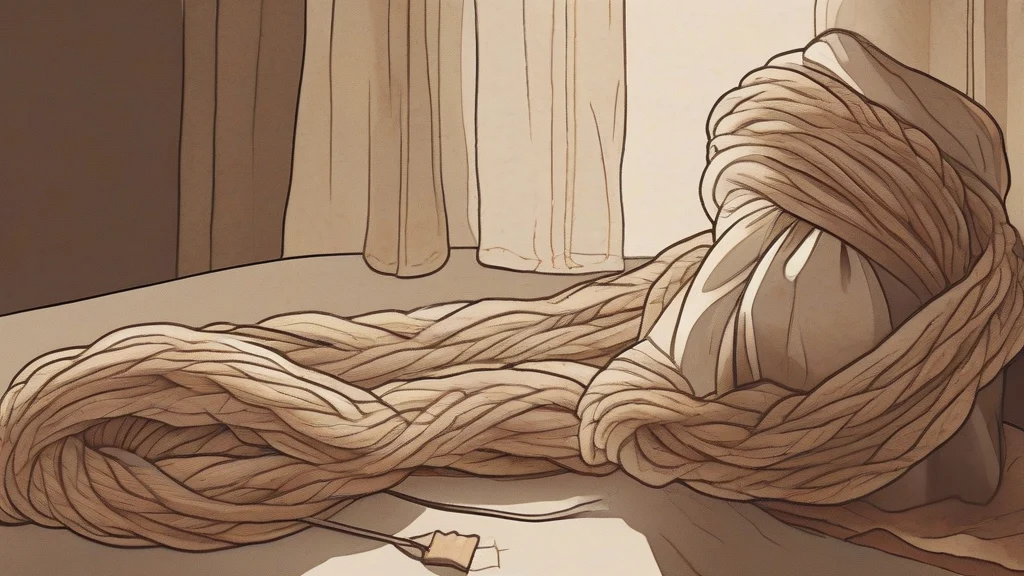
What does fraying mean?
Fraying describes the process by which woven or fibrous material — cloth, rope, thread — gradually unravels or wears away, usually at an edge or point of repeated rubbing. A fraying cuff, hem, or cable signals age, strain, or neglect, and the image has proved so vivid that the word long ago acquired a figurative life of its own: nerves, tempers, patience, and relationships are all routinely described as fraying when they show signs of coming apart under sustained stress. In this extended sense, fraying connotes slow deterioration rather than sudden collapse, which makes it a favourite metaphor in journalism and everyday speech alike. Grammatically it functions chiefly as the present participle of the verb fray, though it can also stand alone as a noun denoting such wear itself. Its twin meanings — physical wear and emotional strain — share a common logic: something once whole being steadily rubbed thin.
Present participle of the verb fray: (of fabric, rope, or similar material) unravelling or wearing away at the edges through rubbing, age, or use; figuratively, becoming strained or worn down, as of nerves or tempers.
"The old mooring rope was fraying where it scraped against the dock."
Use fraying to describe an ongoing process; use the past participle "frayed" for a completed state.
The state or result of material having become frayed — the unravelling or worn condition itself.
"A careful eye could see the fraying along every seam of the antique tapestry."
Rarely used; as a mass noun referring to a condition, fraying normally appears uncounted. A plural would only arise in unusual technical or descriptive contexts.
"The tailor noted several small frayings along the garment's hems."
The word for a worn-out sleeve and a heated brawl trace back to different senses of the same old verb "fray" — one about rubbing cloth, the other about breaking the peace.
Reviewed by Deb Chak, Editor. AI-assisted content curated by RJS Tech Solutions LLP.
Etymology of fraying
The verb behind fraying entered English from Anglo-Norman and Old French forms associated with rubbing and wearing down, ultimately connected to the Latin verb fricare, meaning "to rub" — the same root that gives us the words friction and fricative. From this literal sense of abrasion came the English verb fray, meaning to wear away cloth or rope, attested in Middle English. A separate, unrelated development of the same French borrowing produced the other "fray", the noun meaning a brawl or skirmish, which is why the two senses coexist in modern English despite having nothing to do with each other.
Related word forms
How fraying is actually used
Fraying appears most often as the present participle of the verb "fray", so it typically shows up mid-process rather than describing a completed state (use "frayed" for that). The literal fabric sense is neutral in tone, while the figurative sense — nerves, tempers, alliances fraying — carries a slightly negative connotation of things coming apart under pressure. Both uses are common in journalism, especially political reporting.
Easily confused with fraying
"Fray" can mean a noisy fight or brawl (as in 'enter the fray'), whereas "fraying" refers to the wearing-out or unravelling of material — or, figuratively, of composure.
"Flaying" means stripping off skin or hide, while "fraying" means the gradual unravelling or wearing away of woven or fibrous material.