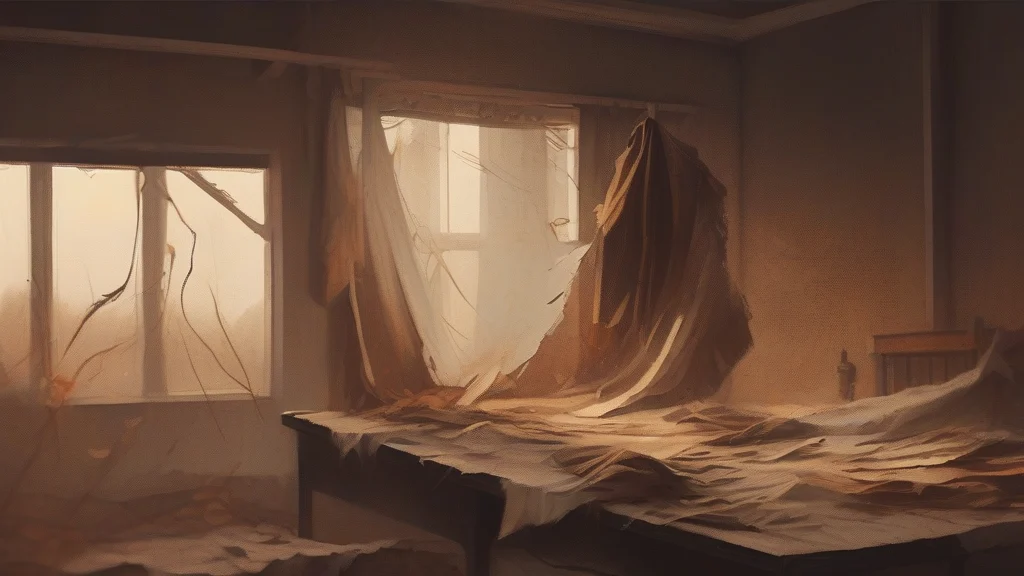
What does tattering mean?
Tattering refers to the process of something, especially a fabric or material, becoming torn, frayed, or worn out. This can occur due to various factors such as exposure to harsh weather conditions, heavy usage, or poor maintenance. The term often implies a gradual deterioration of the material's integrity, leading to a worn or tattered appearance. Tattering can also be used metaphorically to describe the decline or deterioration of something abstract, such as a person's reputation or a relationship. Understanding the concept of tattering is essential in various contexts, including textiles, maintenance, and everyday life.
verbThe act of causing something, especially a piece of cloth, to become torn or frayed.
- The process of becoming or making something torn or frayed.
- The act of wearing something out by use or exposure.
"The strong wind was tattering the sails of the old boat."
"The flag was tattering in the wind, its edges worn and frayed."
"Years of use had tattered the once-beautiful dress."
Reviewed by Deb Chak, Editor. AI-assisted content curated by RJS Tech Solutions LLP.
Etymology of tattering
The term 'tattering' originates from the verb 'tatter', which means to tear or rend into shreds. The word 'tatter' has its roots in Middle English, derived from the Old English word 'tættrian', meaning to tear or rend. Over time, the term 'tattering' emerged as a present participle form of 'tatter', describing the act of causing something to become torn or frayed.
How tattering is actually used
Tattering often implies a gradual process of wear and tear, often due to exposure to the elements or heavy use.