
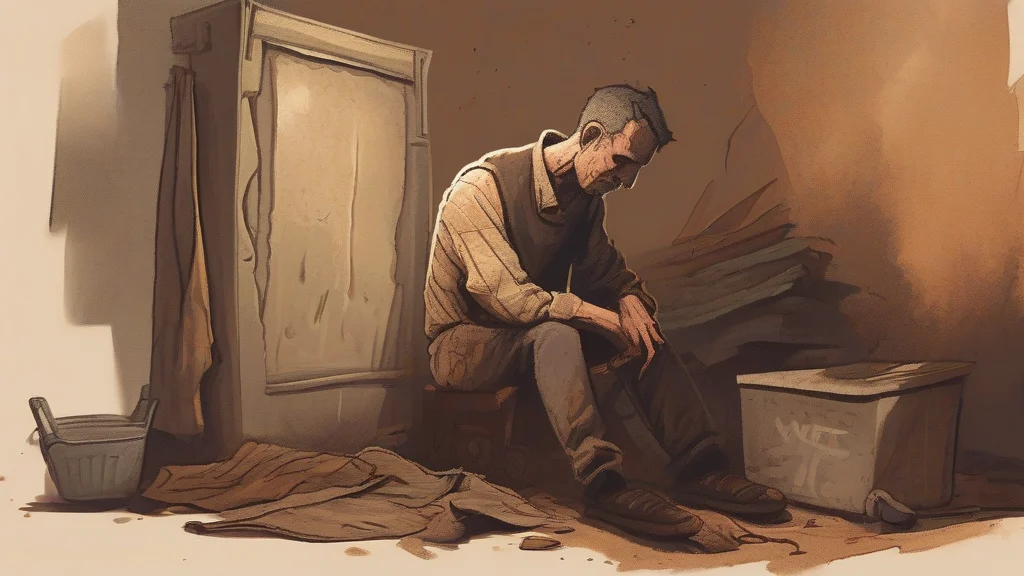
What does tatter mean?
Tatter is a somewhat old-fashioned word for a torn, ragged scrap of cloth, especially one hanging loosely from a larger piece. In the usual plural, tatters describes clothing or fabric so badly damaged that it consists of strips and remnants, as in “in tatters.” The expression also has a figurative sense: a reputation, institution, or plan may be “in tatters” when badly damaged or close to collapse. As a verb, tatter means to tear, fray, or wear something into ragged pieces, and it can figuratively describe the severe undermining of an organization or reputation. The word is found in formal and literary prose as well as ordinary speech, though “shred,” “tear,” “ragged,” or “tattered” may be more natural in many modern contexts. It is useful for conveying not merely that something is damaged, but that its original strength or integrity has gradually disappeared.
A torn, ragged scrap or fragment, especially of cloth; in the plural, clothing or fabric in a severely damaged condition.
"The old coat hung in tatters."
The singular refers to an individual scrap, but the plural is much more common, especially in figurative expressions.
To tear, fray, or wear something so that it becomes ragged or falls into pieces; figuratively, to damage or weaken something severely.
"Neglect had tattered the building's reputation."
Usually plural. The singular denotes one ragged scrap, while “tatters” commonly describes clothing or material in a badly torn condition.
"His coat was reduced to tatters."
From torn cloth to political wreckage, “in tatters” describes anything whose original strength or integrity has been worn away.
Reviewed by Deb Chak, Editor. AI-assisted content curated by RJS Tech Solutions LLP.
Etymology of tatter
The noun comes from Middle English tater or tatter, meaning a ragged piece of cloth. It is generally traced to Old Norse tǫttr, meaning “rag” or “scrap,” and belongs to a broader Germanic vocabulary associated with tearing or shredding; Danish tatter, Norwegian tatter, and German Tatter are cognates. The verb arose from the older cloth-related noun, developing the senses “to tear into pieces” and “to become ragged.”
Related word forms
How tatter is actually used
The noun is usually encountered in the plural, particularly in the idiomatic expression “in tatters.” The verb has a formal or literary tone but is also understood in ordinary speech; “tear,” “shred,” and “fray” may sound more natural in some modern contexts.
Easily confused with tatter
A tatter is a torn or ragged scrap of cloth, whereas a tater is an informal British and Irish word for a potato.