What does freebooting mean?
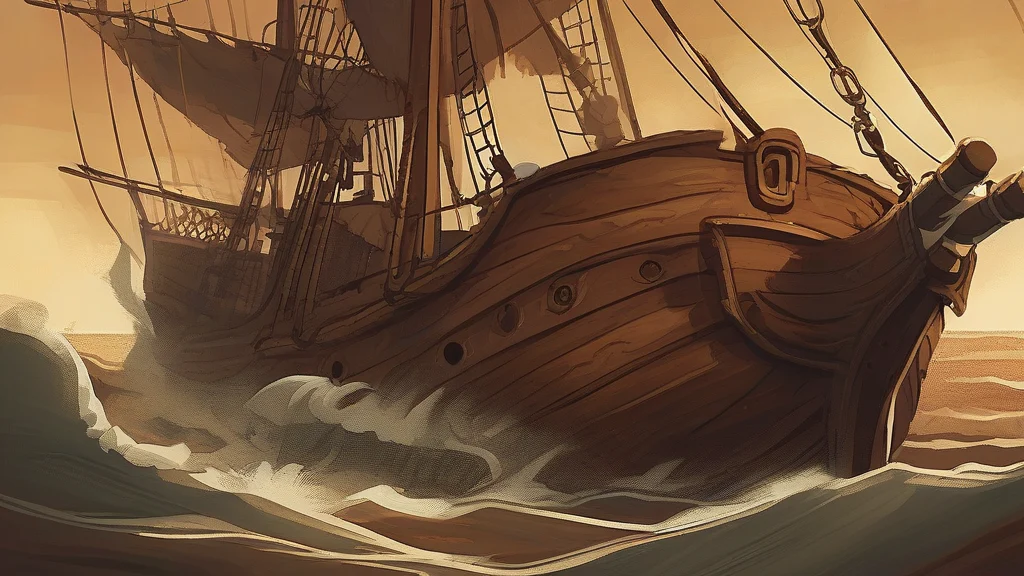
Freebooting is the practice of plundering for personal gain without any legal authorization — in effect, piracy or brigandry. The term takes its name from the freebooter, an adventurer who lived by pillage, and it is most closely associated with the maritime raiding of the sixteenth to eighteenth centuries, when privateers and buccaneers operated across the Caribbean and other shipping lanes. Because a freebooter held no legitimate commission, freebooting carried no pretense of state sanction; it was seizure of property justified only by force. Today the word survives mainly in historical and literary contexts, where it colors accounts of pirates, corsairs, and lawless frontiers. It can also appear figuratively, applied to unscrupulous individuals or organizations that appropriate what belongs to others. Strongly negative in connotation yet tinged with romantic adventure, freebooting remains a vivid way to describe theft on a bold, organized scale.
The action or practice of plundering, especially at sea, without lawful authorization; the activity of a freebooter.
"The memoir recounts years spent freebooting along the Spanish Main."
Usually encountered as a mass noun describing an activity rather than a countable event; often paired with historical settings.
The present participle/gerund form of the rarer verb 'freeboot', meaning to engage in plundering or to live as a freebooter.
"They took to freebooting after their privateering commission expired."
Much less common than the noun; most modern uses treat freebooting simply as a noun.
"Freebooting" descends from the Dutch "vrijbuiter" — literally "free plunderer" — the same word that gave English both "freebooter" and its cousin "filibuster."
Reviewed by Deb Chak, Editor. AI-assisted content curated by RJS Tech Solutions LLP.
Etymology of freebooting
"Freebooting" derives from the Dutch "vrijbuiter", composed of "vrij" (free) and "buit" (plunder, spoil), meaning one who takes plunder freely or for his own profit. The word entered English in the early seventeenth century as "freebooter", with "freebooting" as its verbal noun denoting the activity itself. Its Dutch root also underlies the Spanish-derived "filibuster", which came to describe unauthorized adventurers in the Americas before taking on its modern legislative sense. Cognate forms of the same idea of plundering appear in related Germanic vocabulary of booty and spoils.
Related word forms
How freebooting is actually used
Mostly historical or literary in register, typically describing maritime raiding of the 16th–18th centuries; occasionally used figuratively to describe unscrupulous, exploitative acquisition. It carries an unambiguously negative connotation, though romanticized treatments of piracy sometimes lend it a swashbuckling flavor.
Easily confused with freebooting
Filibustering today means obstructing legislative procedure by prolonged debate (or historically, unauthorized military adventuring in Latin America), whereas freebooting means plundering for personal gain like a pirate.