
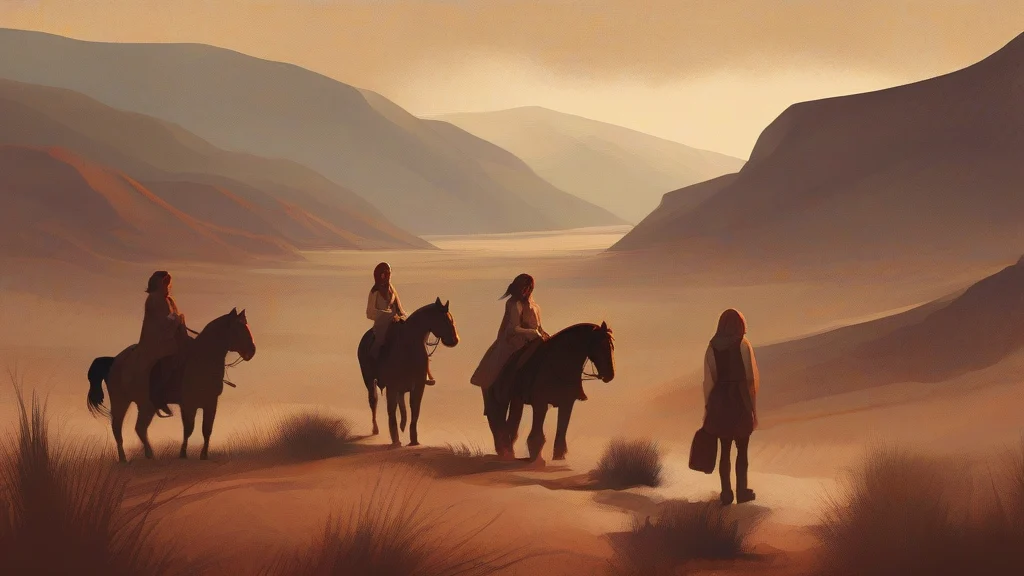
What does frontierswomen mean?
'Frontierswomen' is the plural of 'frontierswoman,' referring to women who lived in or helped settle frontier regions — most famously the American West of the nineteenth century. The word carries connotations of resilience, self-reliance, and hardship, evoking figures who endured isolation, harsh climates, and scarce resources while raising families, running farms and businesses, and occasionally homesteading land in their own right. Historians increasingly foreground frontierswomen in accounts of westward expansion, since their diaries, letters, and memoirs provide intimate records of pioneer life that official documents often overlook. The term is historical rather than everyday: it appears in museum exhibits, textbooks, genealogical research, and popular histories more often than in casual conversation. Closely related to 'frontiersman,' its feminine counterpart highlights how frontier experience was shaped differently for women. For readers of American history, it names an essential and long-underrecognized group.
noun (plural form)The plural of frontierswoman: women who live or lived in a frontier region, especially the settled edges of the American West in the 19th century.
- Women who settled or lived in frontier regions, particularly the 19th-century American West.
- More broadly, any women pioneering life in an unsettled or newly opened region.
"The museum's new exhibit honors the frontierswomen who homesteaded the Great Plains alongside their husbands — and often without them."
"Diaries left by frontierswomen offer some of the most vivid firsthand accounts of westward expansion."
"The society was founded to preserve the letters and photographs of the frontierswomen of the 1870s."
This word is itself a plural; the singular counterpart is 'frontierswoman.' There is no further standard plural.
"The photographs showed weathered frontierswomen standing beside their claim shanties."
Many frontierswomen filed for homesteads in their own names — making them among the first American women to own land outright under the Homestead Act of 1862.
Reviewed by Deb Chak, Editor. AI-assisted content curated by RJS Tech Solutions LLP.
Where does frontierswomen come from?
The word derives from 'frontier,' from the Old French 'frontiere,' meaning a boundary or borderland, itself rooted in 'front,' the forepart — ultimately from Latin 'frons' (forehead). English adopted 'frontier' in the fifteenth century to mean the border of a country, and by the nineteenth century, especially in America, it came to signify the advancing edge of settlement. 'Frontierswoman' emerged as a feminine counterpart to 'frontiersman,' which appeared in American usage during the early nineteenth century as settlers pushed westward.
Related word forms
How frontierswomen is actually used
A historical and somewhat literary term; in modern writing it appears mainly in history, biography, and heritage contexts. It is inherently gender-specific and always plural; the singular is 'frontierswoman.'
Easily confused with frontierswomen
A frontiersman is a man living on the frontier; 'frontierswomen' is specifically the plural feminine form.