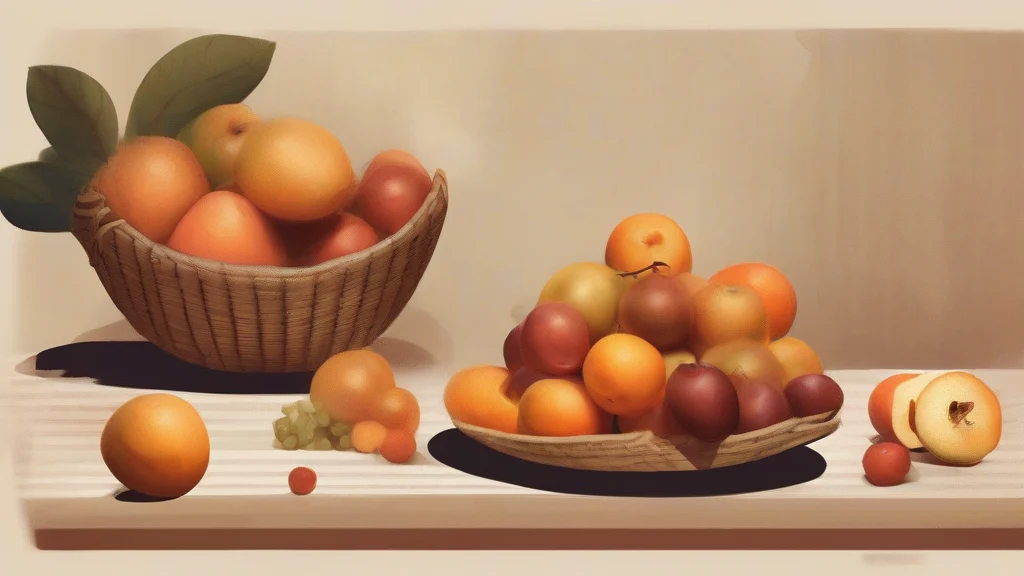
What does fruitage mean?
Fruitage is a noun referring broadly to fruit — both literally, as the crop borne by trees and plants, and figuratively, as the tangible results or rewards of human effort. In its literal sense it describes an orchard's yield or a region's harvest of fruit; in its figurative sense it names what labor, patience, or devotion ultimately produces, making it popular among poets, moralists, and religious writers. The word carries a warm, somewhat antique connotation, evoking abundance and ripeness, and is rarely heard in ordinary modern speech. It derives from Old French, itself rooted in Latin terms for fruit and enjoyment, alongside related words such as fructify and fruitful. Though infrequent today, fruitage remains useful when a writer wants a dignified, evocative alternative to plain 'results' or 'crop,' lending prose a flavor of harvest-time plenty.
nounFruitage denotes fruit, especially as a crop or harvest, or more figuratively the products, results, or rewards of any labor, effort, or process.
- The fruit of plants or trees, considered collectively or as a crop or harvest.
- Figuratively, the results, rewards, or products of any labor, action, or process.
"The orchard's autumn fruitage filled every crate at the market."
"The orchard's abundant fruitage promised a fine season for cider-making."
"After decades of quiet philanthropy, the fruitage of her work was visible in every corner of the city."
The plural is rare because fruitage usually denotes a collective yield; when used figuratively for multiple distinct sets of results, the plural may appear but is uncommon.
"Each season brought new fruitages from the experimental orchards."
Though barely known today, 'fruitage' was once so beloved by writers that entire harvest poems were built around it — and it still lives on in religious texts that speak of 'the fruitage of the Spirit.'
Reviewed by Deb Chak, Editor. AI-assisted content curated by RJS Tech Solutions LLP.
Etymology of fruitage
Fruitage came into English from Old French, where forms denoting fruit and fruit-gathering were in use, tracing back through the Romance languages to Latin roots connected with 'fruit' and enjoyment of produce. It entered English writing around the early seventeenth century and became a favorite term of poets and sermon writers describing both literal harvests and spiritual rewards. Its relatives include fructify, fruitful, and fruit, all descending from the same Latin lineage concerning bearing and enjoying fruit.
How fruitage is actually used
Fruitage is uncommon today and carries a literary, old-fashioned, or devotional tone; it appears mostly in poetry, religious writing, and older prose rather than casual conversation. Its figurative sense — the fruitage of one's efforts — is now its most frequent use.
Easily confused with fruitage
Fructify is a verb meaning to bear fruit or make something fruitful, whereas fruitage is a noun naming the fruit or results themselves.
Fruit is the ordinary everyday term for edible plant produce, while fruitage is a rarer, more formal word that can also refer metaphorically to the outcomes of effort.