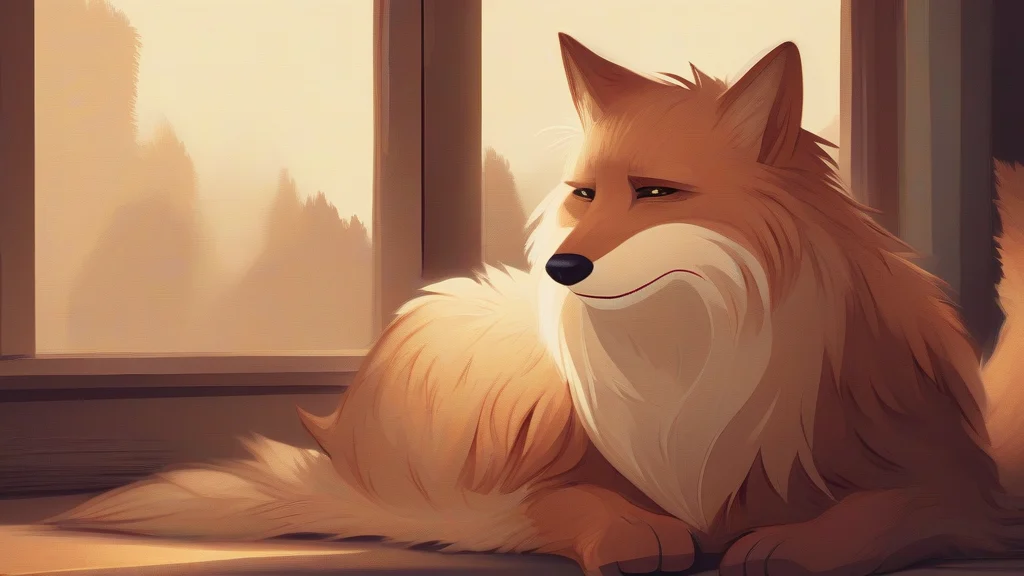
What does furriest mean?
"Furriest" is the superlative form of the adjective "furry," used to describe whatever possesses the most fur, the thickest coat, or the softest fur-like texture among the things being compared. It applies most often to animals — breeds of cats and dogs, wild mammals such as otters and foxes — but extends naturally to objects that imitate fur, including blankets, coats, slippers, and stuffed toys. Because it is a superlative, it almost always appears in comparative contexts: "the furriest breed," "the furriest of the litter." The word carries cozy, affectionate connotations and belongs firmly to informal, everyday English, showing up constantly in pet writing, product descriptions, and casual conversation rather than formal prose. Its appeal lies partly in its tactile immediacy — calling something the furriest evokes touch as much as sight. Derived from "fur," a word whose ultimate origin remains uncertain, it is a straightforward, useful term for anyone describing texture, warmth, or animal covering at its most extreme.
adjectiveThe superlative form of "furry": most covered with or characterized by fur; having the thickest, softest, or most abundant fur.
- (Of an animal or object) covered with the most or thickest fur; most fur-like in texture.
"The Siberian cat is one of the furriest breeds, wrapped in a dense triple coat that shrugs off snow."
"Among all the puppies in the litter, the husky was easily the furriest."
"She reached for the furriest blanket in the shop, savoring its plush softness."
Superlatives like "furriest" turn ordinary description into a contest — and in the animal kingdom, the sea otter takes the title, packing up to a million hairs per square inch.
Reviewed by Deb Chak, Editor. AI-assisted content curated by RJS Tech Solutions LLP.
Etymology of furriest
"Furriest" derives from "furry," an adjectival form of "fur," the word for the soft, dense hair covering of mammals. "Fur" entered English from Old French "forrer" or "fourre" (related to a sheath or lining), which itself likely borrowed from a Germanic source; the precise ultimate origin of "fur" remains uncertain. As English regularly forms superlatives in "-iest" from adjectives ending in "-y," "furry" yielded "furrier" and "furriest."
Related word forms
How furriest is actually used
An everyday, informal comparative-superlative adjective, typically used descriptively of animals, clothing, blankets, and toys. It carries warm, cozy connotations rather than formal ones and appears frequently in pet, fashion, and consumer contexts.
Easily confused with furriest
"Furrier" is primarily a noun meaning a dealer or maker of fur garments (and can also mean 'more furry'), whereas "furriest" is only the superlative adjective meaning 'most furry'.