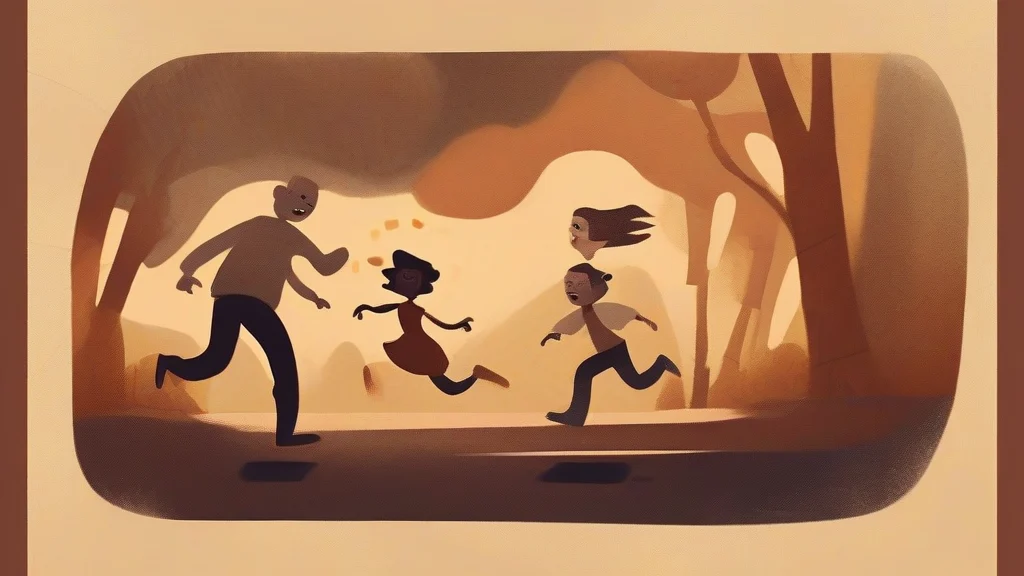
What does gambolled mean?
To gambol is to run, leap, and skip about in bursts of playful energy, and "gambolled" is its past tense. The word conjures images of lambs bounding across green fields or children tumbling through gardens, and it carries a distinctly cheerful, almost storybook flavor that sets it apart from plainer verbs like "ran" or "played." Writers reach for it when they want to suggest innocence, vitality, and unselfconscious joy rather than mere movement. Though it sounds quaint to modern ears, it remains in active use, especially in descriptive and pastoral writing on both sides of the Atlantic. Its etymology is delightfully concrete: it descends through French from Italian, ultimately rooted in the word for "leg," so a gambolling creature is quite literally showing off its legs. For anyone describing youthful exuberance in animals or people, few words capture the mood as charmingly.
verbPast tense of "gambol": to run, jump, or skip about in a playful, lively manner. It typically describes lighthearted, exuberant movement, as of children or young animals.
- To run or jump about playfully and exuberantly (said especially of children, lambs, and other young animals); to frolic.
"The lambs gambolled across the spring meadow while their flock grazed nearby."
"The puppies gambolled in the garden until they collapsed, exhausted, in the sunshine."
"Children gambolled along the beach, chasing gulls and shrieking with delight."
Every time a lamb bounces through a spring field, it's doing exactly what the Italians meant by 'leg-work' — because "gambol" literally traces back to the Latin word for leg!
Reviewed by Deb Chak, Editor. AI-assisted content curated by RJS Tech Solutions LLP.
Etymology of gambolled
"Gambol" entered English in the early 16th century, borrowed from French "gambader," meaning to frisk or leap. The French verb derives ultimately from Italian "gambata," built on "gamba," meaning leg, which traces back to Late Latin. The same Latin root gives us related terms such as "gambado" and the viola da gamba, named for the way it is held between the legs.
Related word forms
How gambolled is actually used
The word carries a warm, somewhat literary or old-fashioned connotation, often evoking pastoral scenes and carefree joy. British English doubles the final consonant before -ed and -ing (gambolled, gambolling), while American English uses a single l (gamboled, gamboling). It is rarely used of adults in formal contexts without an element of whimsy or affection.
Easily confused with gambolled
"Gamble" means to play games of chance for money, while "gambol" means to frolic or leap playfully — despite the similar spelling, they have different origins.
"Gamboled" is simply the American single-l spelling variant of "gambolled," the British double-l form; both mean the same thing.