
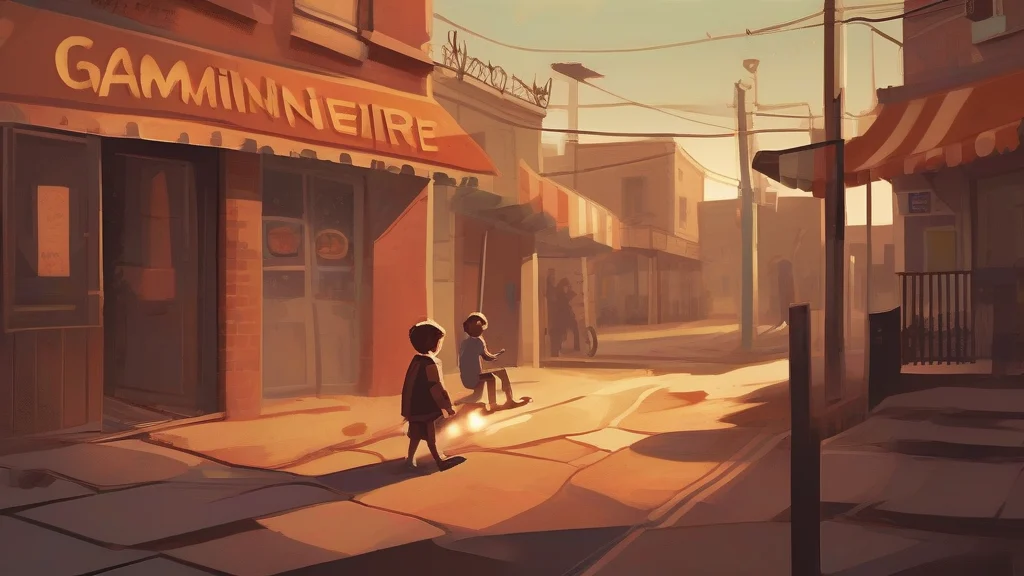
What does gaminerie mean?
Gaminerie is a rare English noun, borrowed from French, meaning playful, mischievous charm — the impish, slightly impudent vivacity associated with streetwise children and adopted by performers, writers, and public figures as a winning personal style. A person displaying gaminerie is witty, saucy, and roguish in an endearing way rather than a malicious one: think of the grinning Parisian gamin immortalised by Victor Hugo, or a film star whose cheeky glances disarm an interviewer. The word appears mostly in literary criticism, profiles, and fashion writing, where it lends a note of cultivated elegance to descriptions of personality. Its synonyms include impishness and roguishness, though none captures quite so precisely the blend of childhood irreverence and urban savvy that gaminerie denotes. Because it entered English as a direct cultural borrowing rather than developing native senses, it remains uncommon in everyday speech, which gives it a distinctive flavour when deployed well — a small verbal flourish for describing charm with a wicked edge.
nounPlayful, mischievous liveliness of manner; the impish charm and saucy wit characteristic of a streetwise child or someone behaving in a boyish, roguish way.
- The quality of being playfully mischievous, impudent, or charmingly roguish in speech or behaviour.
- (In art and literary criticism) The depiction or evocation of street-child vivacity and impudence, especially associated with Parisian gavroche figures.
"Her answers carried an unmistakable gaminerie that made even the stern interviewer laugh."
"With a wink and a grin full of gaminerie, he talked his way past the ticket inspector."
"The actress's gaminerie lit up every scene she was in."
Rarely pluralised; the word is normally uncountable, though a plural occasionally appears in French-influenced texts referring to instances or styles of such playfulness.
"The essay traced the gamineries of French cinema's most beloved ingénues."
Borrowed straight from the streets of nineteenth-century Paris, 'gaminerie' bottles up the impish sparkle of the ragged street urchin who charms everyone while stealing your heart — or your wallet.
Reviewed by Deb Chak, Editor. AI-assisted content curated by RJS Tech Solutions LLP.
Where does gaminerie come from?
Gaminerie comes directly from French, formed on 'gamin', a word for a street urchin or neglected boy that arose in France around the early nineteenth century amid rapid urbanisation of Paris. The suffix '-erie' is the common French device for turning a type of person into an abstract quality (as in 'coquetterie' or 'bouderie'). English borrowed both 'gamine' (for the female counterpart, popularised by the slender, elfin look of actresses like Audrey Hepburn) and 'gaminerie' itself, keeping the French pronunciation largely intact.
How gaminerie is actually used
Gaminerie is a rare, literary word borrowed directly from French, used chiefly in criticism, journalism about performance and fashion, and elegant prose. It carries a warm, affectionate connotation — the mischief it describes is charming rather than malicious — but its rarity can read as precious if overused.
Easily confused with gaminerie
A gamine is a person (typically a slim, elfin girl or woman) with a mischievous charm, whereas gaminerie is the abstract quality or spirit such a person displays.