
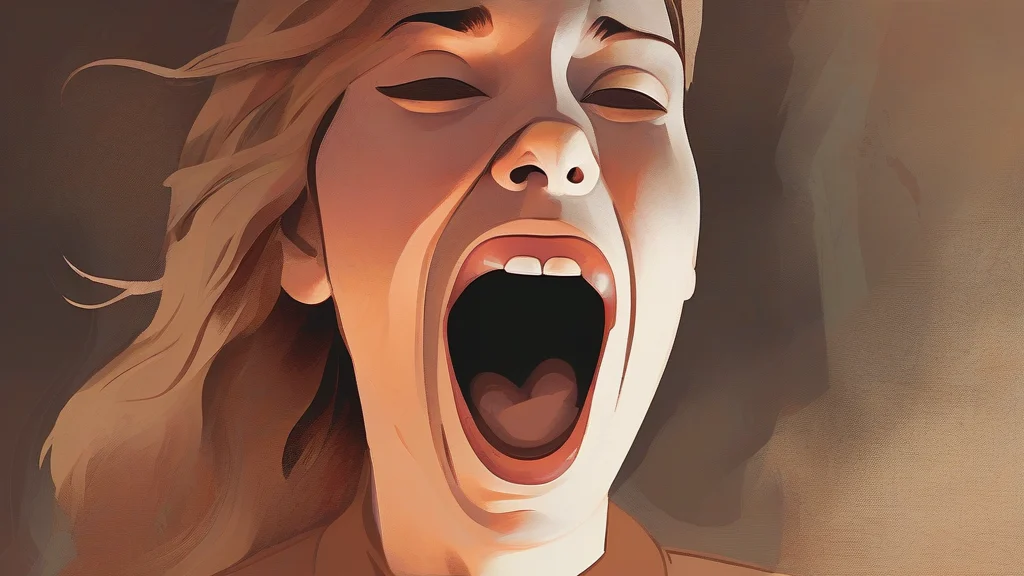
What does gaped mean?
Gaped is the past tense and past participle of gape, a verb describing the opening of the mouth in a wide, conspicuous movement. Its typical implication is astonishment, amazement, wonder, or disbelief, as when someone gapes at an extraordinary sight or unexpected news. The word can also describe a physical opening more generally, such as a chasm or cavern that gaped before the explorers. Gaped is particularly effective in narrative and descriptive writing because it makes a reaction visible and dramatic: a character’s open mouth conveys surprise before any explanation is needed. Although the word is common in both British and American English, its slightly literary and expressive tone distinguishes it from more neutral alternatives such as looked or stared. It is especially useful when the open mouth is central to the image or to the character’s reaction.
verbGaped is the past tense and past participle of gape. It means to open the mouth wide, typically in astonishment, amazement, or awe; by extension, to stare with an open mouth.
- To open the mouth wide, especially in astonishment, amazement, or awe.
- To stare or look fixedly with the mouth open, often as an expression of surprise, wonder, or disbelief.
"The child gaped at the towering dinosaur skeleton, unable to believe that it had once been alive."
"The visitors gaped at the enormous cavern stretching beneath the mountains."
"She gaped in disbelief when she saw the final score."
A mouth can gape from wonder, shock, or a very long yawn, turning a small opening into a full-body reaction.
Reviewed by Deb Chak, Editor. AI-assisted content curated by RJS Tech Solutions LLP.
Words that share this root
Related word forms
How gaped is actually used
Gaped is used as the simple past or past participle of gape. It is especially common in narrative and descriptive writing, where it conveys a vivid reaction of surprise, wonder, or amazement; the expression gaped at is particularly established.
Easily confused with gaped
Gaped emphasizes an open mouth, while gazed means to look steadily or intently; a person can gaze without opening their mouth.