
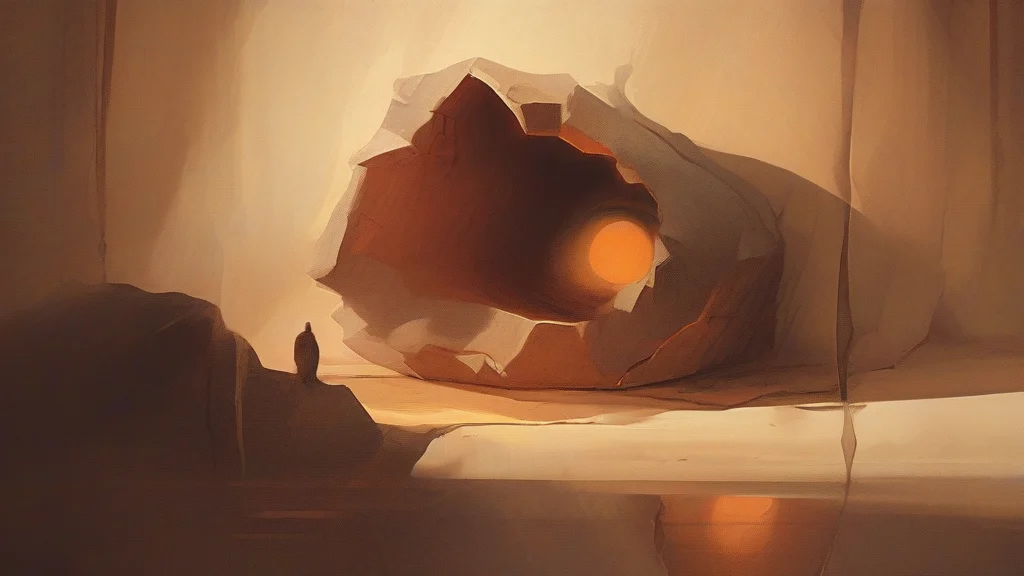
What does gaping mean?
Gaping describes an opening that is conspicuously wide, exposed, and often alarming. It can refer to physical gaps, such as a gaping wound, hole, or chasm, and it can also describe people who stare with their mouths open in astonishment. The word is more vivid than simply saying that something is open: a gaping hole suggests that it is unusually large or difficult to cross, while a gaping wound suggests serious damage and vulnerability. In phrases involving a face, such as “gaping at” or “a gaping mouth,” it conveys surprise, amazement, or sometimes comic disbelief. The word is common in both formal and informal English, though its use for dramatic or graphic injuries may be unsuited to sensitive contexts.
Wide open, especially in a way that is striking, exposed, or alarming.
"The shipwreck left a gaping gap in the hull."
Common in figurative descriptions of serious damage, danger, or neglected conditions.
To open the mouth wide, especially in surprise or amazement; to stare with one's mouth open.
"He gaped at the enormous creature standing beside the road."
Usually used with “at” when describing someone who stares in astonishment.
Gaping brings to mind an opening so wide that it dominates the scene: a yawning chasm, a wound that cannot close, or a face caught in astonishment.
Reviewed by Deb Chak, Editor. AI-assisted content curated by RJS Tech Solutions LLP.
Where does gaping come from?
The word comes from the Old English verb gapan, meaning “to yawn” or “open the mouth wide,” and is related to forms in other Germanic languages. English gap, referring to an opening or space, is also connected with the same Germanic vocabulary, while yawn is a cognate expressing a similar wide opening of the mouth. Over time, gaping developed into both a verb describing an open-mouthed stare and an adjective meaning “wide open” or “conspicuously exposed.”
Related word forms
How gaping is actually used
The adjective is especially vivid and often carries a note of danger, exposure, shock, or exaggeration. As a verb, it usually describes staring or speaking with one's mouth open in amazement.