
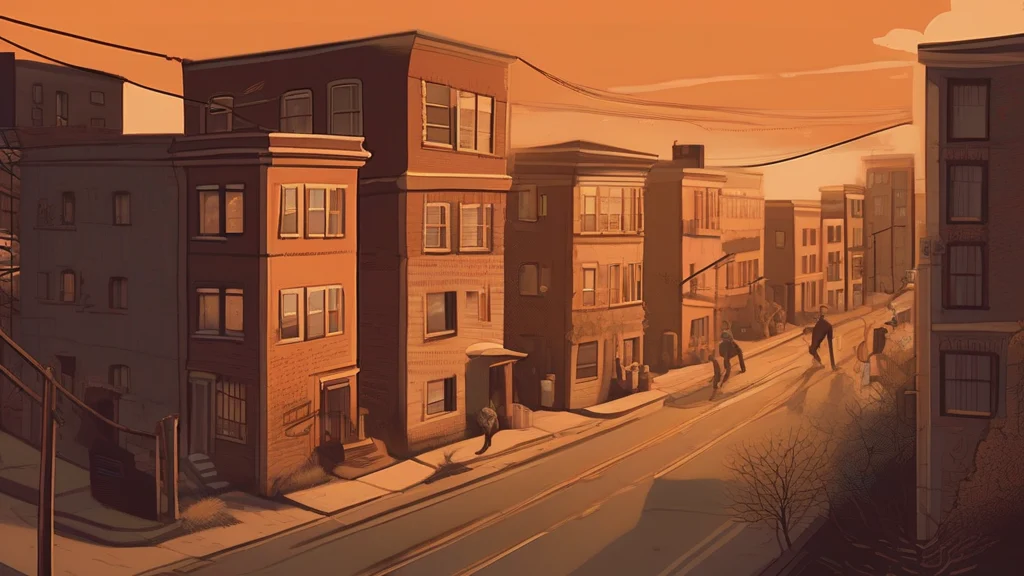
What does gentrification mean?
Gentrification names the social and economic transformation of a neighborhood through renewed investment, rising property values, and the arrival of more affluent residents. The process may involve renovated buildings, new businesses, improved infrastructure, and changes to local culture, but it can also bring higher rents, fewer affordable homes, and the displacement of longtime residents. In contemporary discussion, the term is therefore often evaluative rather than simply descriptive, although speakers may emphasize either the physical improvements or the social costs. Gentrification is useful because it connects changes to the appearance of a place with changes in ownership, class, and power. The word is common in urban policy, journalism, planning, and community debate, particularly in cities experiencing rapid development and demographic shifts. Although coined in relation to British inner-city change, it is now used widely in English to describe similar dynamics in North America and other countries.
nounThe process of urban renewal in which a neighborhood experiences increased investment, rising property values, and an influx of more affluent residents, often accompanied by changes to housing, businesses, and local culture. The term commonly implies or highlights the displacement of lower-income or longtime residents.
- The process of an urban neighborhood undergoing renewed investment and socioeconomic change, typically involving rising property values, wealthier incoming residents, and possible displacement of existing communities.
"Rising rents and restored historic buildings signal gentrification, while longtime residents worry about displacement."
"The proposed development has been criticized for accelerating gentrification in a neighborhood with a long history of affordable housing."
"Tourists often praise the district's restored architecture, but residents are divided over the gentrification that has followed the redevelopment."
The plural is grammatically formed but uncommon; gentrification is usually treated as a mass noun.
"The report examines gentrifications in several formerly industrial districts."
Coined in 1964, “gentrification” named a class change that new investment could bring to inner-city London.
Reviewed by Deb Chak, Editor. AI-assisted content curated by RJS Tech Solutions LLP.
Where does gentrification come from?
Gentrification was formed in the 20th century from “gentrify” plus the noun-forming suffix “-ation.” Gentrify was itself a modern coinage based on “genteel” and the suffix “-ify,” while genteel developed from Old French gentil and ultimately Latin gentilis, a term associated with gens, meaning clan or family, and later with genteel or noble status. Words such as genteel, gentleman, gentility, and gentile descend from the same broader Latin family of words.
Related word forms
How gentrification is actually used
This is a formal analytical term used especially in urban studies, journalism, planning, and community debate. It is often critical, referring not only to physical improvement but also to higher costs, socioeconomic change, and displacement, although some speakers use it more neutrally. Unlike the broader term “urban renewal,” it usually implies an effect on the social composition of a neighborhood.