
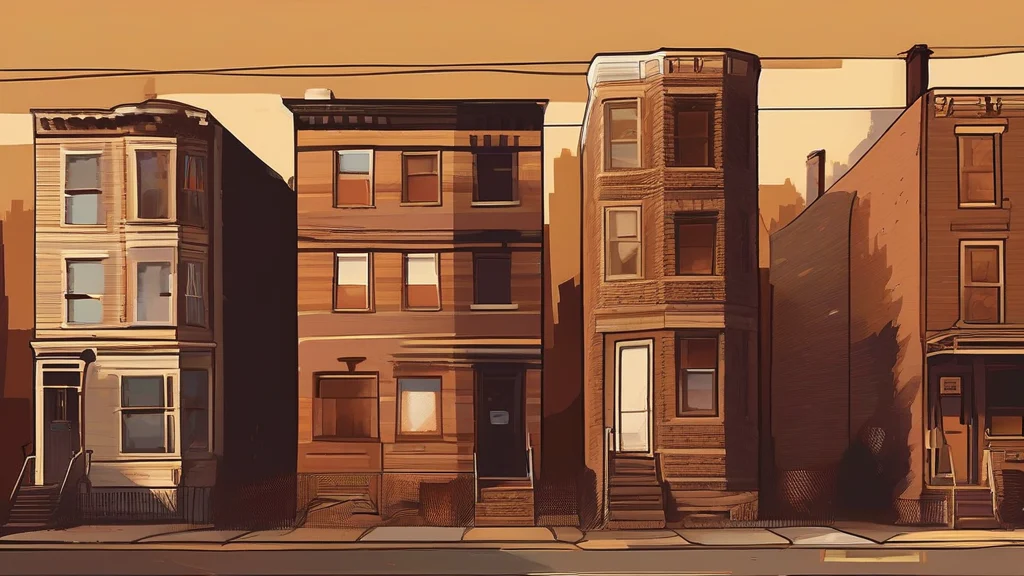
What does gentrifying mean?
Gentrifying is the present participle of gentrify and describes the transformation of a neighborhood or district through the arrival of wealthier residents, businesses, investment, or redevelopment. It commonly refers to changes such as renovated buildings, new restaurants, fashionable shops, higher property values, and increased rents. The term often has a critical connotation because these changes may benefit newcomers and property owners while making the area less affordable for long-term or lower-income residents. Gentrification can also be used more neutrally in urban planning, journalism, and sociology, although many speakers retain its association with inequality and displacement. The word is related to the more familiar noun gentrification and the adjective gentrified. Understanding gentrifying is useful when discussing city development, housing affordability, neighborhood change, and the social effects of economic investment.
To undergo or bring about the transformation of a neighborhood or area associated with wealthier residents, new investment, redevelopment, and rising property values.
"Several new businesses began gentrifying the old warehouse district."
The present participle is often used for an ongoing process, and the term frequently implies the social consequences of neighborhood change.
Describing a person, business, development, or other factor involved in the gentrification of an area.
"The controversial apartment complex was accused of gentrifying the surrounding neighborhood."
Attributive use is common, especially in phrases such as gentrifying development or gentrifying business.
The word comes from a 1960s sociological observation: when wealthier people move into working-class neighborhoods and help transform them, the old community may be priced out of its own home.
Reviewed by Deb Chak, Editor. AI-assisted content curated by RJS Tech Solutions LLP.
Where does gentrifying come from?
The word belongs to the family of gentrification, a term coined in the 1960s by British sociologist Ruth Glass to describe changes in working-class urban neighborhoods. Gentrification was formed from the older word gentry and the suffix -fication, and gentrifying developed from that noun through the formation gentrify and its verb inflection. More distant relatives include genteel, gentleman, and gentle, which ultimately derive from the Latin family represented by gentilis.
Related word forms
How gentrifying is actually used
The word is commonly used in urban, social, and political contexts. It is often evaluative rather than neutral: saying that an area is gentrifying may imply criticism of rising costs, cultural change, or the displacement of less affluent residents.