
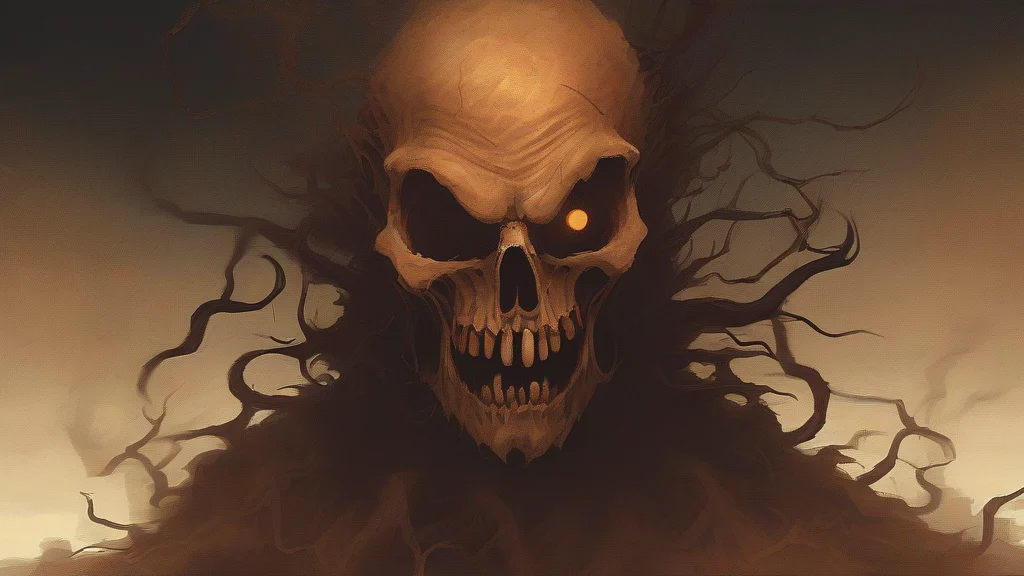
What does ghastliest mean?
Ghastliest is the superlative form of the adjective ghastly. It means more dreadful, horrifying, or grisly than anything else being considered, and is often used for sights, experiences, crimes, or stories that are exceptionally disturbing. The word has an emphatic, memorable quality: it does not merely say that something is bad, but identifies it as the most shocking or nightmarish example in a comparison. Although the expression can sound literary or dramatic, it is also natural in ordinary conversation when discussing something that has made a strong negative impression. Its development from a word associated with ghosts and spirits gives it a particularly vivid association with fear, death, and the supernatural.
adjectiveGhastliest is the superlative of ghastly and means extremely dreadful, horrifying, or grisly. It describes something so unpleasant or terrifying that it stands out as the worst of its kind.
- Most ghastly; most dreadful, horrifying, or grisly.
"The abandoned hospital was the ghastliest place she had ever visited."
"The film’s ghastliest scenes stayed with me for days."
"Of all the excuses offered, that was the ghastliest."
Ghastliest began as a word for the supernatural: what was once “ghostly” became the ultimate description of sheer horror.
Reviewed by Deb Chak, Editor. AI-assisted content curated by RJS Tech Solutions LLP.
Etymology of ghastliest
Ghastliest is derived from ghastly, an English adjective that developed from Middle English forms associated with ghost and the Old English word gāst, meaning “spirit,” “soul,” or “ghost.” The adjective originally conveyed a connection with ghosts or the supernatural before its meaning broadened to describe something dreadful or terrible. Ghastliest is the modern superlative ending attached to this inherited adjective.
Related word forms
How ghastliest is actually used
Ghastliest has a strongly expressive, sometimes literary tone and is commonly used for particularly horrific sights, experiences, crimes, or stories. It is grammatically a superlative adjective and normally follows “the,” although it can also occur in contexts such as “the ghastliest of them all.” Pronunciation varies between British and American English.
Easily confused with ghastliest
Ghastly means extremely dreadful or horrifying, while ghastliest is the superlative form used to identify the most ghastly example in a group or comparison.
Ghostly means relating to a ghost or spirit, whereas ghastliest describes something overwhelmingly horrible, grisly, or dreadful.