
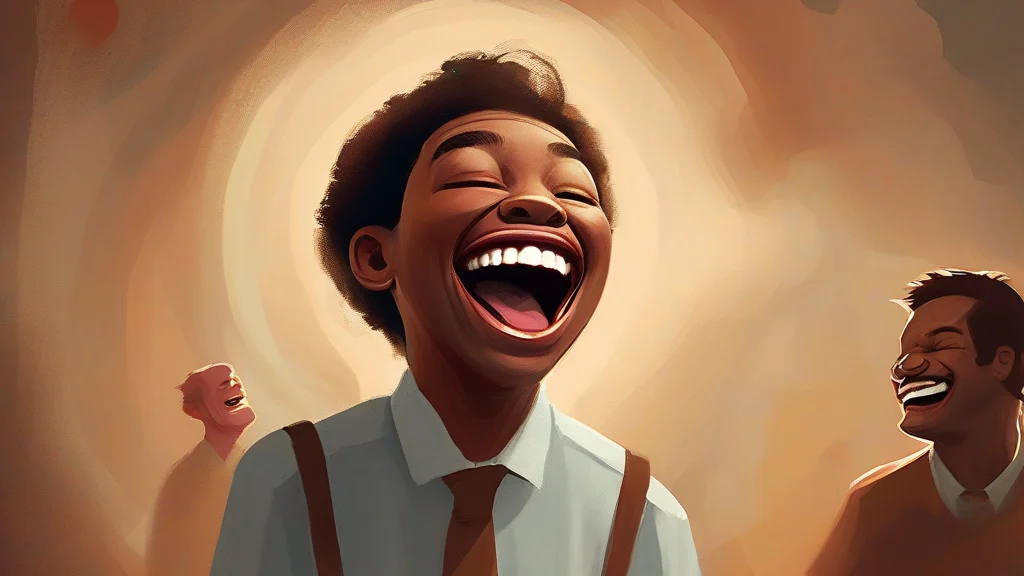
What does giggling mean?
Giggling is the act of laughing in a light, high-pitched, often slightly nervous or self-conscious way. Unlike a full laugh, a giggle can seem half-suppressed, as though the speaker is trying not to react too visibly or audibly. The word can be used as a verb, as in “They were giggling throughout the performance,” or as a noun naming the laughter itself. Although standard in ordinary conversation, it may carry a faintly juvenile or dismissive tone, especially when adults describe children or portray someone’s reaction as trivial. Compared with chuckling, giggling suggests higher and lighter laughter; compared with laughing outright, it implies restraint, embarrassment, or nervousness. The word is especially useful for expressing not only amusement but also the social awkwardness of trying to contain a reaction, whether caused by delight, embarrassment, or shared complicity.
To laugh repeatedly in a light, high-pitched, often nervous or self-conscious way, as if trying to suppress laughter.
"The audience began giggling when the speaker lost her place."
The verb is commonly used in the progressive form, “is giggling,” to describe the behaviour rather than a single laugh.
Light, high-pitched or suppressed laughter, often expressing nervousness, embarrassment, or amusement.
"The nervous giggling in the back row made it difficult to hear the question."
The noun is ordinarily uncountable in modern use; the plural gigglings is uncommon.
The plural is rare; the uncountable singular form is normally preferred.
"The nervous gigglings of the children echoed down the corridor."
Sometimes a giggle is less about what is funny than about trying not to be caught laughing.
Reviewed by Deb Chak, Editor. AI-assisted content curated by RJS Tech Solutions LLP.
Where does giggling come from?
Giggling is the present-participle and gerund form of the verb giggle, formed with the regular English ending -ing. The verb is recorded in Middle English as giggen, of uncertain origin, and developed into the modern form giggle. Related English derivatives such as giggly and giggler continue the same verbal root.
Related word forms
How giggling is actually used
The word is informal and often conveys amusement mixed with embarrassment, nervousness, or an attempt at discretion. It can sound juvenile or faintly dismissive, particularly when adults use it to describe the behaviour of children or to minimize someone's reaction.
Easily confused with giggling
Giggling is laughter, whereas gargling is the rumbling or gurgling sound produced when liquid is swirled in the throat.
Both are light forms of laughter, but tittering usually consists of short, suppressed sounds, while giggling is often higher-pitched and more continuous.