
What does gigot mean?
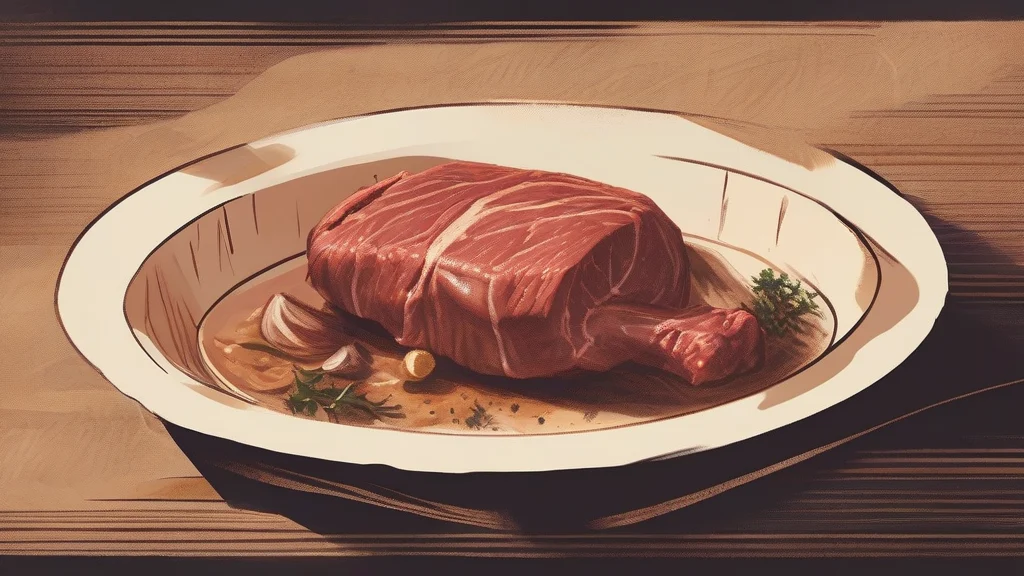
Gigot is a culinary noun for a joint of meat cut from an animal's leg, especially a sheep. In British and American English, it most often refers to a large cut of lamb or mutton, the sort of roast traditionally served as the principal meat at a meal. Although the word is relatively uncommon in everyday conversation, it remains familiar from restaurant menus, recipes, and discussions of traditional European cooking. Its meaning is both specific and elegant: it identifies a leg cut rather than a generic steak or chop, while lending the dish a French culinary character. Gigot entered English from French, where the word is related to gigue and to the source of English jig. The result is a memorable example of how a foreign term can become the precise name for an ordinary cut of meat.
nounA joint of meat cut from the leg of an animal, especially a sheep. The term most commonly refers to a cut of lamb or mutton.
- A joint of meat cut from the leg of an animal, especially lamb or mutton.
"The restaurant served a roast gigot of lamb with seasonal vegetables."
"A gigot of lamb is traditionally served with mint sauce."
"The butcher prepared a gigot of mutton for the holiday meal."
The plural is gigots, though such meat is often described by its kind, as in a gigot of lamb.
"Two gigots of lamb were prepared for the banquet."
Gigot is a French import that originally meant an animal's leg, so its culinary meaning is more literal than it might first appear.
Reviewed by Deb Chak, Editor. AI-assisted content curated by RJS Tech Solutions LLP.
Where does gigot come from?
The English noun was borrowed from French gigot, meaning a leg of mutton and ultimately related to Old French gigue, “leg.” The French gigue is also the source of English jig, while Latin giga lies farther back in the word's family. The English form reflects the French initial /dʒ/ and an unstressed final syllable.
How gigot is actually used
The word is chiefly culinary and is especially familiar from menus, recipes, and food writing. In both British and American English, it usually refers to lamb or mutton rather than to a generic leg cut, and it can sound somewhat formal or French-inspired in ordinary conversation.