
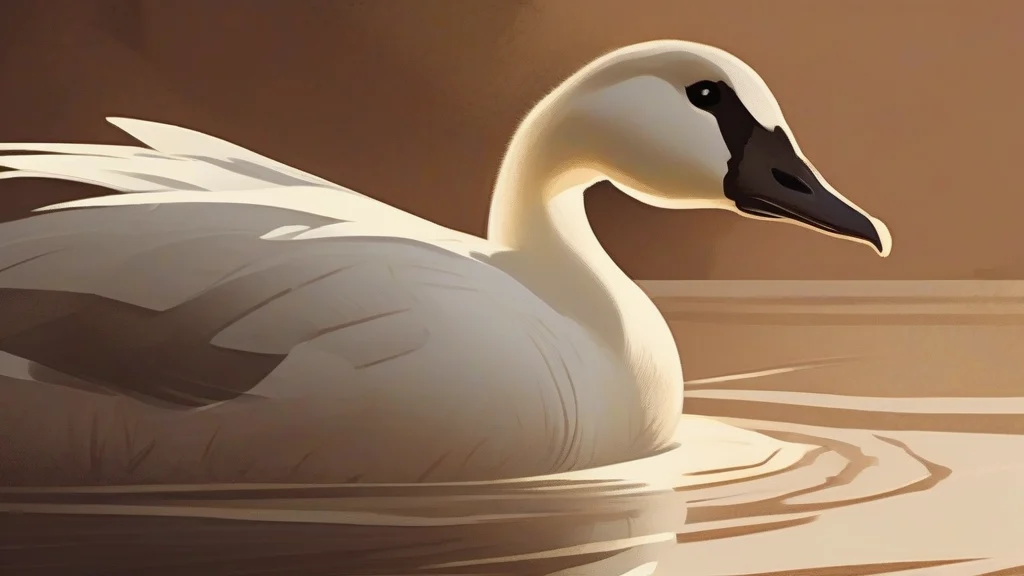
What does goose mean?
A goose is a large waterfowl related to ducks and swans, recognizable by its long neck, webbed feet, broad bill, and loud honking call. Wild geese are strongly associated with seasonal migrations, while domestic geese are kept for their eggs, meat, feathers, and as farm birds that can act as guards. In everyday English, goose also serves as an informal label for a foolish, silly, or awkward person. Expressions such as “silly goose” and “cook the goose” have become established idioms, while “wild goose chase” describes a futile or complicated pursuit. The word is used similarly in British and American English, with no major regional restriction. Its unusual plural, geese, is one of the most familiar features of English morphology. The term can sound affectionate when used teasingly among friends, but it may be considered rude or belittling when directed at someone in a serious situation. As a verb, to goose someone means to prod or pinch them playfully.
A large waterfowl of the duck and swan family, characterized by a long neck, webbed feet, and a broad bill. Informally, it can also mean a foolish or silly person.
"The farmer's geese crossed the road in a noisy line."
The personal sense is informal and may be affectionate or insulting depending on context.
To prod or pinch someone, especially playfully.
"The children goosed him in the back of the classroom."
Informal; often implies a playful or teasing action.
The standard plural is geese, with the vowel changing from the long “oo” sound to “ee.”
"Geese gathered around the feeder in the farmyard."
A goose can fly long distances, but the word's most familiar second meaning is a wonderfully blunt label for a fool.
Reviewed by Deb Chak, Editor. AI-assisted content curated by RJS Tech Solutions LLP.
Where does goose come from?
The English word descends from Old English gōs, a long-established word for the bird. It developed from Proto-Germanic *gans, which was borrowed ultimately from a Proto-Indo-European root associated with geese. Related forms appear in languages such as Dutch gans, German Gans, and Old Norse gans; the English compounds gooseberry and goosefoot also preserve the word's older associations with plants and plant names.
Related word forms
How goose is actually used
As an insult, goose is informal and can sound playful among friends but dismissive or insulting in serious contexts. The verb goose is also informal and commonly means to prod or pinch someone.
Easily confused with goose
A gander is specifically a male goose, whereas goose refers to the species or to a goose of any sex.