
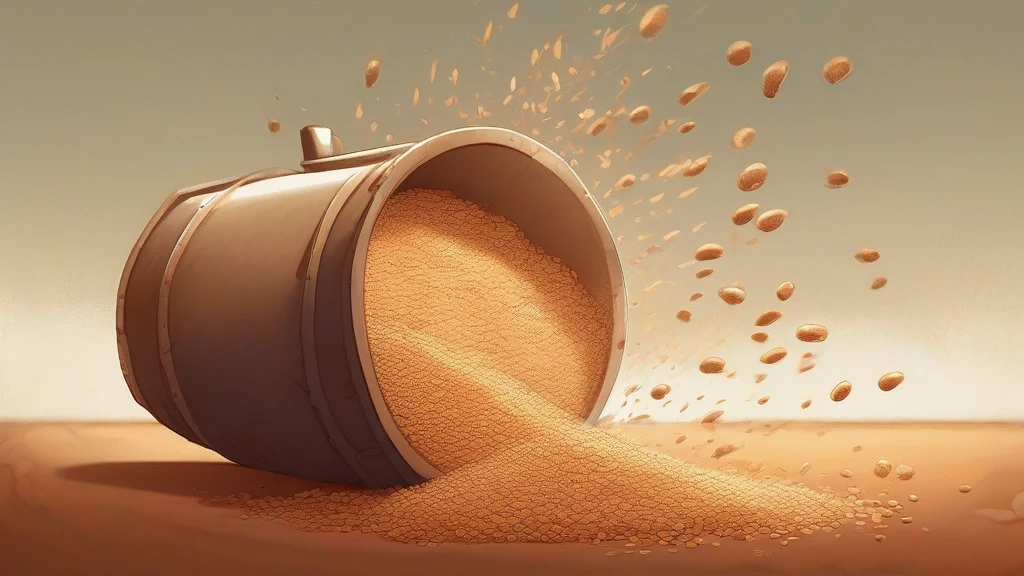
What does granulating mean?
Granulating is the present participle of granulate, meaning to form into granules or reduce something into small grains. The word is especially familiar in manufacturing, pharmaceuticals, mining, food processing, and materials science, where material may be described as granulating into pellets, crystals, or coarse particles. In more descriptive contexts, granulating can evoke a surface becoming textured as fine grains form, suggesting a gradual change in appearance or consistency. The term is more specific than simply making or breaking something up: the resulting pieces are small, relatively distinct grains rather than a fine powder. Because it can name both an active process and the resulting condition, granulating is useful when discussing transformations in which a substance becomes divided, textured, or crystalline.
verbForming granules or reducing a material into small grains. It can also describe a substance becoming or developing a granular texture.
- Forming granules or reducing a material into small grains.
- Becoming or developing a granular texture.
"The machine is granulating the feedstock into fine pellets."
"The pharmaceutical pellets are granulating in the coating pan."
"As the metal cooled, its surface was granulating into a crystalline texture."
Granulating is where a smooth material becomes a world of tiny grains—one of the quiet transformations behind powders, pellets, and textured surfaces.
Reviewed by Deb Chak, Editor. AI-assisted content curated by RJS Tech Solutions LLP.
Words that share this root
Related word forms
How granulating is actually used
Most common in technical, industrial, pharmaceutical, and materials contexts. It can also appear in descriptive writing for a surface or substance developing a visibly grainy texture.
Easily confused with granulating
Granulating describes the process of forming grains, whereas granular describes something made up of or characterized by small grains.