
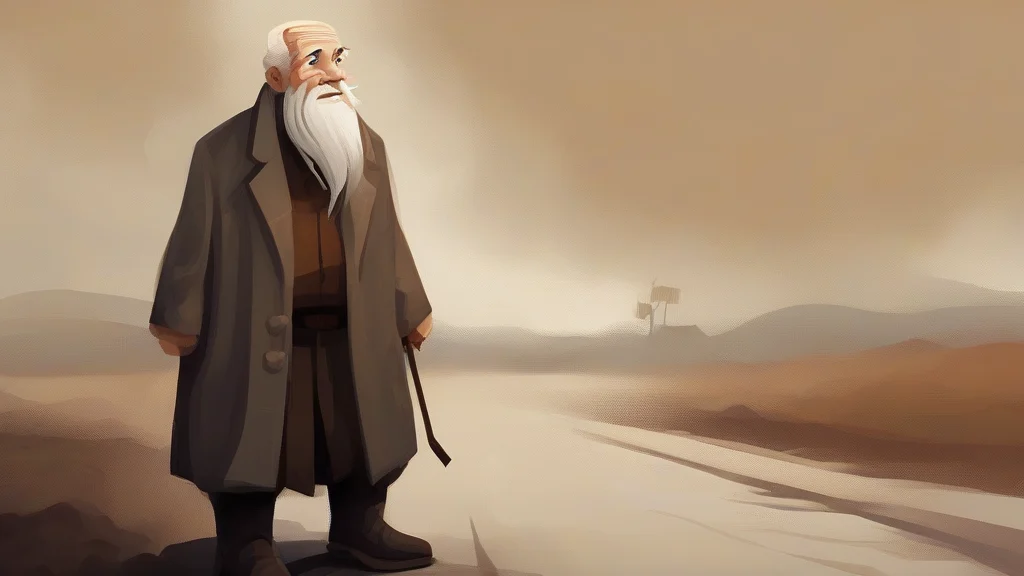
What does graybeard mean?
A graybeard is an old man, usually imagined as having a gray or white beard. The word combines a physical description with the associations traditionally attached to advanced age: experience, wisdom, authority, and perhaps a degree of stubbornness or old-fashioned thinking. It can therefore be used affectionately, as a familiar or humorous label for a venerable elder, or more figuratively to describe an experienced person whose judgment is respected. In modern English, "graybeard" is relatively literary and somewhat dated, so "old man," "elder," or "old-timer" may sound more natural in everyday conversation. Its figurative sense is not necessarily insulting, although the word can become patronizing when directed at someone whose views are dismissed as merely old-fashioned. The expression is common in British and American English, with "greybeard" used in British spelling.
nounAn old man, especially one with a gray or white beard. By extension, it can refer to an elderly, experienced, or venerable person.
- An old man, especially one with a gray or white beard.
- An old, experienced, or venerable man; sometimes used figuratively for a long-serving or respected person.
"The village graybeard offered the young scholar a piece of advice passed down through generations."
"A venerable graybeard read aloud from the leather-bound ledger."
"The young campaigner listened carefully as the old graybeard explained how the council had reached its decision."
The regular plural is graybeards, with an added s.
"The village was full of graybeards who remembered the original courthouse."
A word for the patriarch with a snowy beard, graybeard carries both the authority of age and the hint of an old-fashioned attitude.
Reviewed by Deb Chak, Editor. AI-assisted content curated by RJS Tech Solutions LLP.
Where does graybeard come from?
The word is an English compound formed from "gray" and "beard," both of which are old Germanic elements in English. It developed in the early modern period as a descriptive term for an elderly man whose beard had turned gray or white. Over time, the expression acquired the broader figurative sense of an experienced or venerable elder; "greybeard" is the corresponding British spelling.
Related word forms
How graybeard is actually used
The word can sound affectionate, humorous, or mildly patronizing, depending on tone and context. It is more literary or old-fashioned than the neutral phrase "old man," and the spelling "greybeard" is standard in British English.
Easily confused with graybeard
Greybeard is the usual British spelling of the same word; it does not represent a different meaning.