
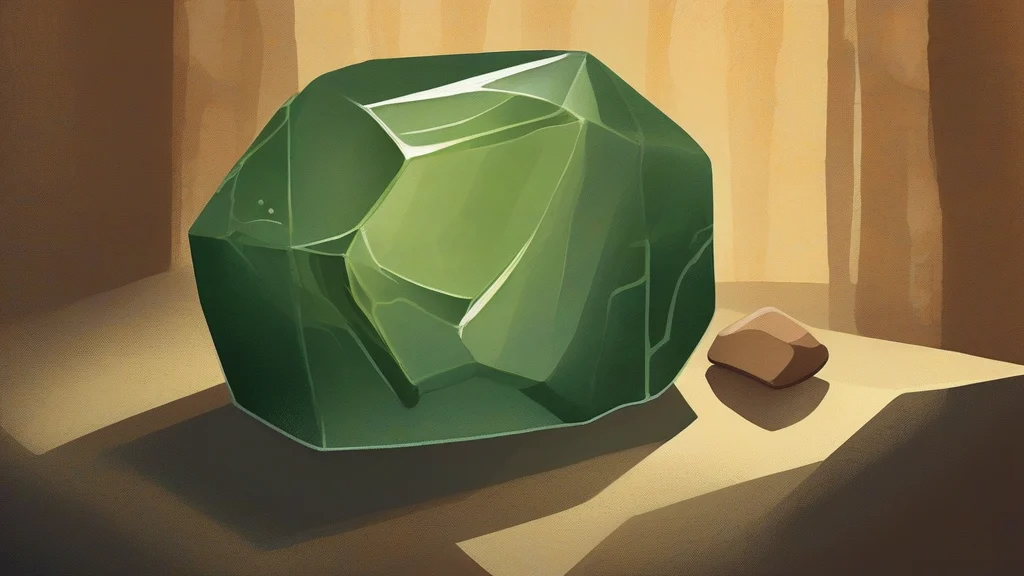
What does greenstone mean?
Greenstone is a general name for a green-coloured stone or mineral, particularly one that can be carved or used in jewellery. The term has a special resonance in New Zealand, where it commonly denotes nephrite jade, a durable material valued by Māori and known as pounamu. Greenstone objects have been made into pendants, tools, weapons, and other decorated forms, giving the word archaeological and cultural significance as well as ornamental appeal. In mineralogy, the name has also been applied to compact green minerals such as actinolite. Although “greenstone” can sometimes refer loosely to jade, jade and greenstone are not exact equivalents: jade refers specifically to nephrite or jadeite, while greenstone is broader and varies according to context. The word is consequently most useful when discussing carved green objects, New Zealand lapidary traditions, or green-coloured mineral specimens.
nounAny green-coloured stone or mineral, especially one valued for carving, jewellery, or ornament. In New Zealand, the term commonly refers to nephrite jade, known in Māori as pounamu.
- Any green-coloured stone or gem, especially one suitable for carving or ornament.
- In New Zealand usage, nephrite jade and related greenstone materials valued by Māori; nephrite is known as pounamu.
- A mineralogical term for certain compact green minerals, especially actinolite.
"The museum displayed a carved greenstone pendant from Aotearoa New Zealand."
"The museum displayed a carved greenstone pendant from Aotearoa New Zealand."
"The geologist identified the specimen as greenstone, a traditional name for green compact minerals including actinolite."
The plural is used when referring to individual carved pieces or separate specimens; the mass noun is more natural when discussing the material generally.
"The collection includes two rare greenstones found during the excavation."
Māori carved pounamu into ornaments and tools long before the English compound “greenstone” became its common overseas name.
Reviewed by Deb Chak, Editor. AI-assisted content curated by RJS Tech Solutions LLP.
Where does greenstone come from?
English greenstone is a transparent compound formed from green and stone, reflecting its original use as a general name for green-coloured stones. It subsequently became established in mineralogical and lapidary contexts. In New Zealand English, it became a familiar label for nephrite jade, whereas Māori pounamu is the Indigenous name for that material and is not etymologically related to the English compound.
How greenstone is actually used
The word is fairly uncommon outside jewellery, lapidary, geological, and New Zealand contexts. In New Zealand it can carry cultural and historical significance because Māori worked nephrite greenstone into tools, ornaments, and weapons.
Easily confused with greenstone
Jade specifically includes nephrite and jadeite, whereas greenstone is a broader name for green-coloured stones and can also refer to minerals such as actinolite.