
What does guava mean?
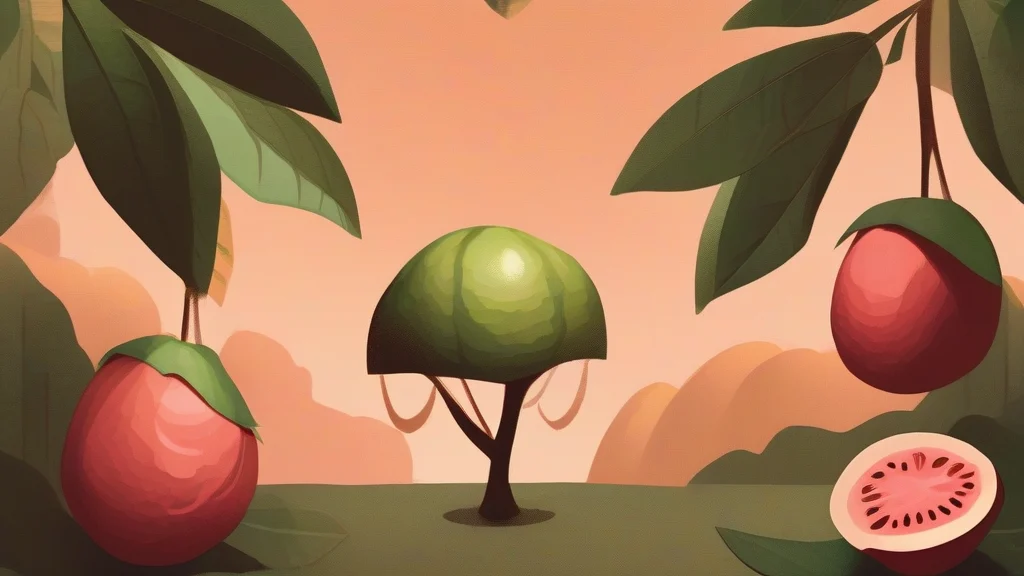
Guava names both a tropical fruit and the tree or shrub that bears it. The fruit is generally rounded, with soft white, yellow, pink, or red flesh and many small seeds. Its mildly sweet flavor is often described as a cross between pear, strawberry, and citrus, though individual varieties differ considerably. Guavas are eaten fresh, made into juice, jam, jelly, paste, and preserves, and used in both sweet and savory dishes. The word also refers to the evergreen plant, especially Psidium guajava, which is cultivated throughout tropical and subtropical regions. In everyday English, guava is a familiar international food term rather than a specialist botanical expression. The distinction between the fruit and the tree usually depends on context: a shop might display guavas, while a gardener might describe planting a guava tree.
nounGuava is the edible fruit of a tropical American tree or shrub in the genus Psidium, especially Psidium guajava. The word can also refer to the plant that produces the fruit.
- The edible fruit of the guava tree, with soft flesh that may be white, yellow, pink, or red and commonly contains numerous small seeds.
- The tropical American tree or shrub that bears guava fruit, especially the species Psidium guajava.
"She served fresh guava with cream at the end of the meal."
"Guava juice is sweet, mildly aromatic, and especially refreshing when chilled."
"The gardener planted a guava near the back fence, where it can grow into a small tree."
Use guavas when referring to multiple fruits or trees.
"The market had ripe guavas stacked beside baskets of mangoes."
The word guava traveled from the Caribbean to kitchens around the world, helping a distinctive tropical fruit become a familiar pantry ingredient.
Reviewed by Deb Chak, Editor. AI-assisted content curated by RJS Tech Solutions LLP.
Where does guava come from?
English borrowed the word from Spanish guava, which in turn came from Taíno guáva, an Arawakan language of the Caribbean. The form developed in European languages through variants such as Spanish guayaba, French goyave, and Galician guaba. Its adoption accompanied the spread of the fruit and the plant beyond their native American growing regions.
How guava is actually used
Guava is used in British, American, Indian, and other varieties of English. In ordinary usage, the unmodified noun can refer either to the fruit or to the tree that bears it.