
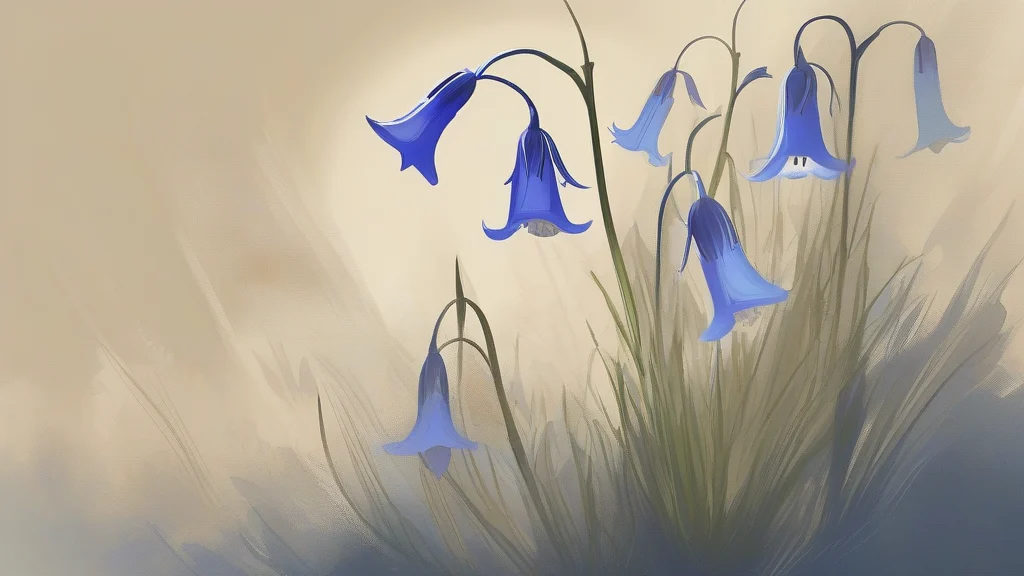
What does harebell mean?
Harebell is a slender perennial wildflower whose fine stems carry narrow leaves and delicate blue, bell-shaped blossoms. It belongs to the bellflower family, Campanulaceae, and is often found in meadows, grasslands, and other open habitats. The word is especially associated with British and American nature writing, where it conveys a delicate, slightly old-fashioned, and poetic quality; in modern gardening and botanical contexts, it is also used as a specific plant name. Harebells may be called bluebells, although the familiar spring bluebell of British hedgerows is a different plant with larger, more nodding flowers. The flower’s name is traditionally connected with the hare and the bell-shaped form of its blossoms. Although harebell is not among the most frequently used English vocabulary words, it is useful because it identifies a particular wildflower while also creating a vivid image through its compound formation. In a sentence, the word can bring an entire landscape into focus: a meadow scattered with small blue harebells in late summer.
nounA slender perennial wildflower of the bellflower family, with narrow leaves and delicate blue, bell-shaped flowers. The name is also used for the flowers themselves.
- A slender perennial wildflower with narrow leaves and blue, bell-shaped flowers.
- The blue flower of the harebell plant.
"Harebells sprinkled the meadow with blue in late summer."
"The path through the meadow was fringed with blooming harebells."
"She pressed a harebell between the pages of her botanical notebook."
The standard plural adds -s, especially when referring to several plants or flowers.
"The first harebells appeared among the grasses."
A harebell sounds like a tiny bell for a hare, but its delicate blue flowers belong to the same family as Canterbury bells and bellflowers.
Reviewed by Deb Chak, Editor. AI-assisted content curated by RJS Tech Solutions LLP.
Where does harebell come from?
The word is generally traced to an Old English compound formed from an element meaning “hare” and another meaning “bell.” The name has continued in English with the botanical meaning of the plant and its blue, bell-shaped flowers. The related terms bellflower and bellwort preserve the older use of “bell” for a flower resembling a bell.
How harebell is actually used
Harebell is uncommon in everyday modern English but is familiar in British and American literary, poetic, and nature-writing contexts. It is a more specific name than the general term "bellflower" and should not be confused with the spring-flowering plant usually called bluebell.
Easily confused with harebell
Harebell is a bellflower-family plant, whereas the plant most commonly called bluebell in British English is a hyacinth and belongs to a different family.