
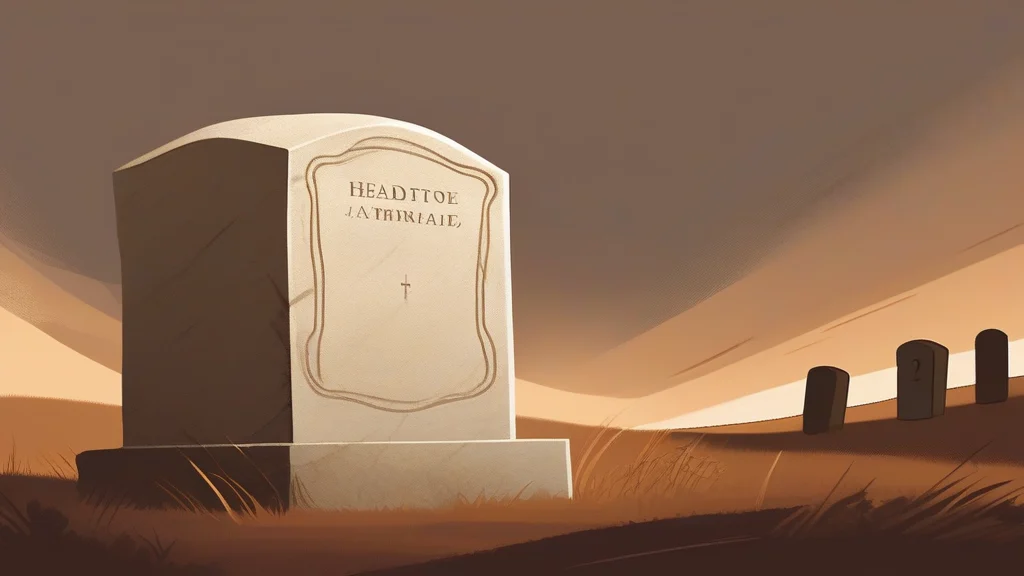
What does headstone mean?
A headstone is a stone marker placed at the head of a grave, usually carrying the name and dates of the person buried there and sometimes additional religious words, verses, or epitaphs. The term is used in both British and North American English, especially in discussions of cemeteries, graves, funerals, and memorial practices. It is narrower than the general word tombstone: a tombstone may refer to a whole grave monument or to the stone structure associated with a burial, whereas a headstone identifies the marker at the head of the grave. In everyday speech, gravestone is often used almost interchangeably with headstone, though it is broader in meaning. Headstone can also appear in historical and genealogical contexts when discussing inscriptions, cemeteries, and the recording of family history. Because it is a physical marker, it carries a strong association with remembrance, mortality, family connection, and the preservation of personal identity after death.
nounA headstone is a stone marker placed at the head of a grave, usually bearing the deceased’s name, dates, and other identifying or commemorative information. It may be an upright slab, tablet, or other small monument.
- A stone marker, usually inscribed, placed at the head of a grave.
"The family chose a simple granite headstone for the grave."
"Rain had darkened the lettering on the old headstone."
"The museum displayed a photograph of the cemetery and the newly carved headstone beside the grave."
The regular plural is used when referring to multiple grave markers.
"The cemetery contains several headstones bearing the same family name."
A headstone turns a patch of earth into a name, a date, and a story that strangers can read.
Reviewed by Deb Chak, Editor. AI-assisted content curated by RJS Tech Solutions LLP.
Where does headstone come from?
Headstone is a compound of head and stone, both inherited from Old English. The word stone comes from Old English stān, with cognate forms across Germanic languages, while head derives from Old English hēafod. Like gravestone and tombstone, headstone was formed by combining these English elements with the established Old English word stone.
Related word forms
How headstone is actually used
Headstone is standard in British and North American English. It is especially associated with cemeteries and burial traditions, and can sound formal or commemorative in literary contexts.
Easily confused with headstone
A headstone specifically names the marker positioned at the head of a grave, while a tombstone can refer more broadly to a grave monument or the stone structure associated with a burial.
A gravestone is the general term for a stone that marks or commemorates a grave; a headstone more specifically identifies the marker at the head end of the grave.