
What does hoggery mean?
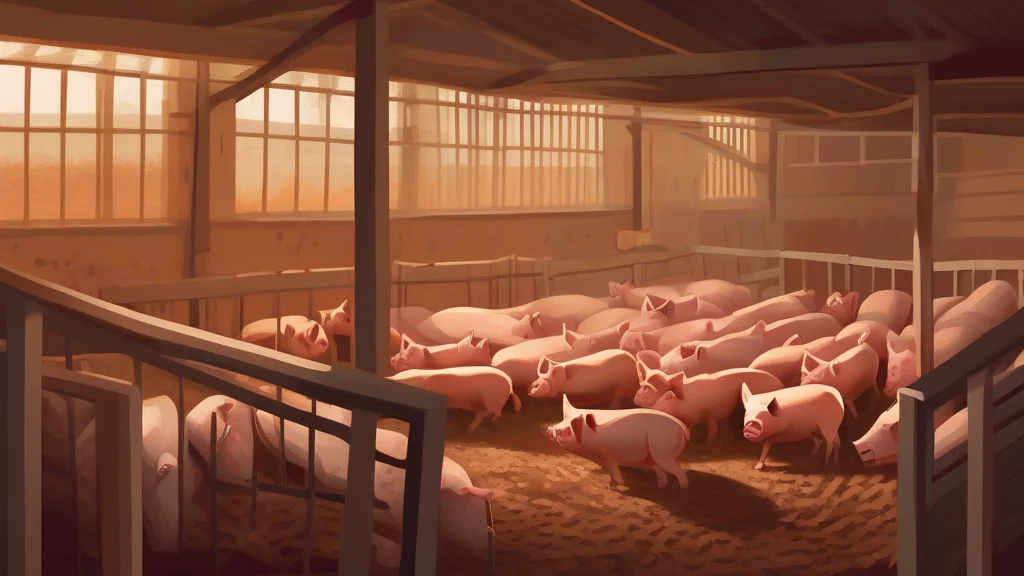
Hoggery is a rare English noun with a vivid origin in livestock keeping. Its literal meanings are a pigsty or other enclosure for hogs and, by extension, a herd or collection of them. The word can also be used figuratively for a filthy, disorderly, or squalid place, carrying a strongly negative judgement rather than merely describing untidiness. Because hoggery is uncommon in contemporary English, it tends to appear in literary, historical, or deliberately archaic writing, where its concrete rural associations make the figurative sense especially forceful. A sentence about a neglected farmyard or collapsing municipal building can use the noun to turn an ordinary description into a memorable image of neglect. In dictionaries, hoggery belongs only to the noun class, and its regular plural is hoggeries. Though obscure enough to puzzle many readers, the word remains useful for its earthy precision: it names both the enclosure where hogs are kept and, figuratively, a place whose condition can itself be called filthy.
nounA pigsty or other enclosure where hogs are kept; also, a herd or collection of hogs. Figuratively, a filthy, disorderly, or squalid place.
- A pigsty, swineyard, or other enclosure where hogs are kept.
- A herd or collection of hogs.
- A filthy, disorderly, or squalid place.
"The neglected farmyard had become little more than a hoggery, its pens filled with mud and refuse."
"The lane behind the cottages was little more than a hoggery, with refuse drifting against the broken fences."
"By dusk, the farmer had driven the scattered hogs back into the hoggery."
The regular plural of the noun, used for multiple enclosures or groups of hogs.
"The farm contained several hoggeries separated by muddy lanes."
Hoggery is where the pigs live—and, figuratively, a place so filthy that even the pigs would have complained.
Reviewed by Deb Chak, Editor. AI-assisted content curated by RJS Tech Solutions LLP.
Words that share this root
Related word forms
How hoggery is actually used
Rare and chiefly encountered in literary, historical, or deliberately archaic writing. The literal senses may be neutral, while the figurative sense is strongly derogatory and implies filthy disorder.