
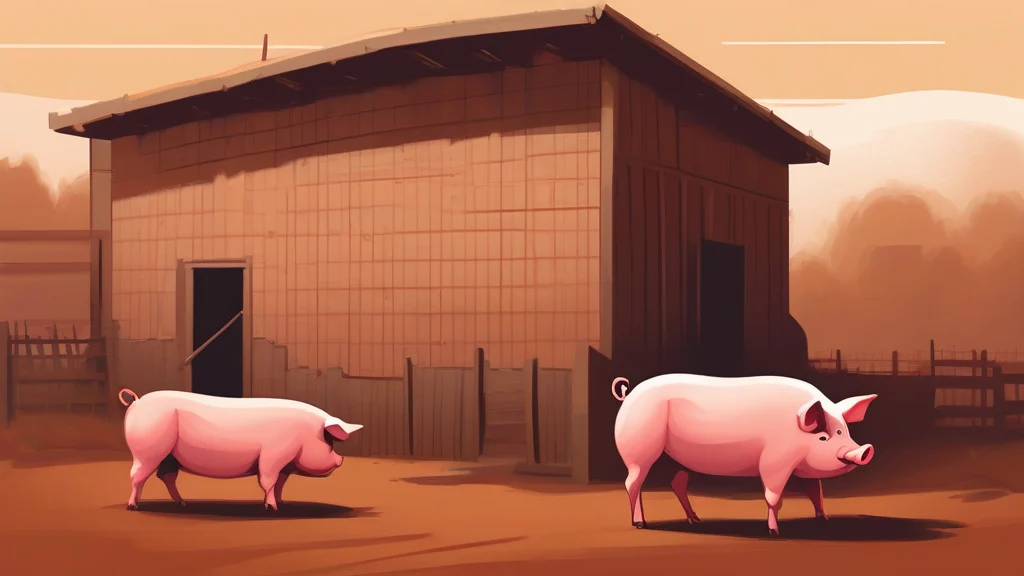
What does piggery mean?
A piggery is a place where pigs are kept or raised, especially a farm or enclosure devoted to them. The word can also refer more broadly to the activity or business of pig keeping. It is chiefly associated with British and other regional forms of English, whereas “pig farm” is the usual neutral term in American English. Piggery has a practical, slightly traditional tone, often suggesting a small or established farm rather than a large modern agricultural operation. It is useful when speaking specifically about the place where pigs are housed or about the enterprise involved in raising them, although “piggery” is less common in general contemporary usage than the plainer “pig farm.”
A place where pigs are kept or raised.
"The piggery stands behind the main farmhouse."
Chiefly British and regional English.
The business or activity of keeping pigs.
"He made a living from piggery and the sale of pork."
This sense is less common than the place-name sense and may sound traditional or regionally marked.
The standard plural is “piggeries,” with the change from y to ies.
"Several piggeries supply pork to the local market."
A piggery is literally where the pigs go, but the word can also refer to the business of keeping them.
Reviewed by Deb Chak, Editor. AI-assisted content curated by RJS Tech Solutions LLP.
Etymology of piggery
“Piggery” is an English word formed from “pig” and the suffix “-ery.” The suffix has long been used in English to create nouns indicating a place, collection, occupation, or activity, as in “bakery” and “fishery.” The compound naturally developed to mean a place for keeping pigs and, by extension, pig keeping itself.
How piggery is actually used
Chiefly British and regional English. In American English, “pig farm” is much more common, while “piggery” may sound distinctly old-fashioned or local.