
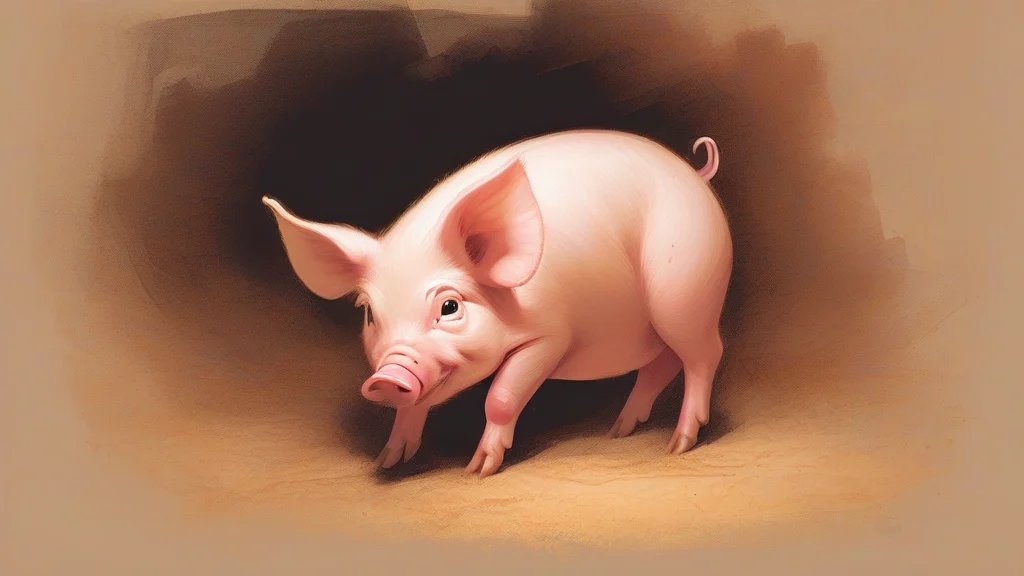
What does piglet mean?
Piglet is the ordinary English noun for a young pig, especially one that has recently been born or separated from its mother. It is used in farm and animal-care contexts when the young animal’s age is relevant, and it may also refer more broadly to a small pig. The word is familiar rather than technical, and its diminutive form can sound affectionate in descriptions of animals or children, although it remains the standard agricultural term. Related regional terms include hoglet and shoat, but piglet is understood throughout British and American English. The word’s form is transparent: it combines pig with the diminutive ending -let, making the animal’s smallness or youth explicit. In writing about livestock, piglet is precise because it distinguishes a young animal from a mature sow or boar. In general prose, the word can add a vivid, concrete image of something small, newly born, or vulnerable. It is particularly useful when describing the care of newborn animals, whose needs differ markedly from those of adult pigs.
nounA young pig, especially one that has recently been born or weaned. The term may also refer more broadly to a small pig.
- A young pig, especially one that has recently been born or weaned.
"The farmer watched the sow nuzzle each piglet in the litter."
"The farmer watched the sow nuzzle each piglet in the litter."
"A newborn piglet slept beside its mother in the straw."
The standard plural of piglet is piglets.
"The piglets grew quickly during their first weeks."
Piglets are born with temporary stripes that fade as they mature.
Reviewed by Deb Chak, Editor. AI-assisted content curated by RJS Tech Solutions LLP.
Where does piglet come from?
Piglet is an English diminutive of pig, formed by adding the ending -let. This formation is characteristic of English diminutive nouns and explicitly conveys smallness or youth. The same productive root appears in related forms such as pig, pigs, piggy, and piggery.
Related word forms
How piglet is actually used
Neutral in British and American English. The term is common in farming and animal-care writing; in general prose, it can have a warm, diminutive, or affectionate tone.