
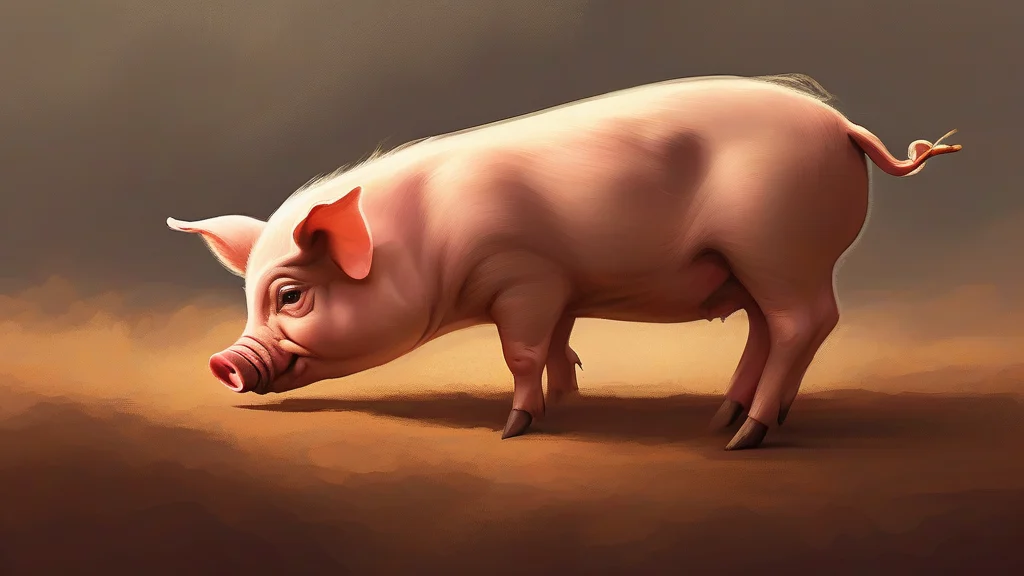
What does pigling mean?
A pigling is a young or small pig, a word with the same basic meaning as the much more familiar “piglet.” It is used particularly in descriptions of farm animals, rural settings, and traditional or literary language, although it is not restricted to any one English-speaking region. The word is formed transparently from “pig” and the diminutive suffix “-ling,” which conveys the idea of a little or young animal. Because “piglet” is the normal contemporary term, “pigling” may sound unusual, old-fashioned, or deliberately traditional to modern readers. It remains perfectly clear in context and can be especially effective when the smaller size or youth of the animal is being emphasized. The word is countably noun, with the regular plural “piglings,” and is usually accompanied by an article or determiner.
nounA young or small pig. The word is less common in contemporary English than the standard everyday term “piglet.”
- A young or small pig.
"The pigling squeezed through the gap in the fence and into the garden."
"A pigling ran toward the farmer as soon as the feed was scattered."
"The old story describes the youngest pigling as the most curious of the litter."
The regular plural used when referring to more than one young pig.
"The two piglings followed the sow across the yard."
A diminutive with a long reach: the same “-ling” suffix that makes a pigling a piglet also gives us a duckling and a yearling.
Reviewed by Deb Chak, Editor. AI-assisted content curated by RJS Tech Solutions LLP.
Where does pigling come from?
“Pigling” is formed within English by combining “pig” with the diminutive suffix “-ling,” a productive ending also found in words such as “duckling.” The formation reflects the literal idea of a little pig, and “pig” itself is the source of related English words including “piglet” and “piggery.” The exact historical point at which the combined form arose is uncertain, but its meaning has remained stable.
How pigling is actually used
This is a count noun and is normally used with an article, possessive, or a modifier such as “young,” “small,” or “stray.”
Easily confused with pigling
Both words mean a young pig, but “piglet” is the usual modern term, whereas “pigling” is less common and sounds more traditional or literary.