
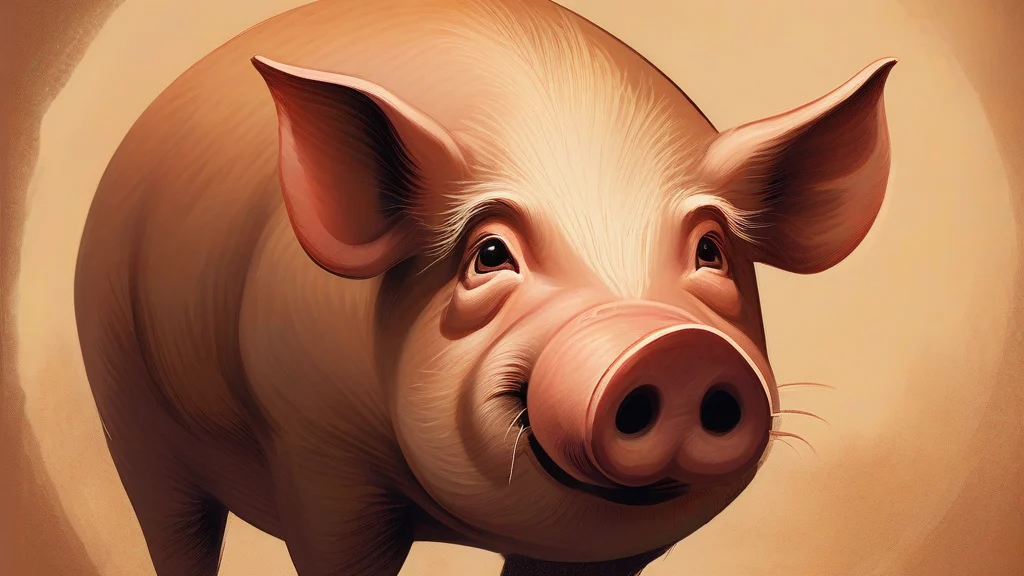
What does hog mean?
Hog is a familiar word with both literal and figurative uses. Its original noun meaning is a domesticated pig, particularly one raised for meat. From that animal's reputation for eating voraciously, the word developed the informal sense of a greedy or selfish person who takes more than their share. As a verb, 'to hog' describes selfishly taking or monopolizing something: attention, a conversation, a resource, or the latest news. The expression carries a note of disapproval, particularly when the behavior seems deliberate or inconsiderate. Hog also appears in established idioms and compounds, including 'go the whole hog,' 'hog wild,' and 'hog the limelight.' In British and American English, it combines a plain, earthy quality with a versatile figurative vocabulary, making it especially effective in informal speech, headlines, and criticism of excessive consumption.
A domesticated pig, especially one raised for meat; by extension, a greedy or selfish person who takes more than their share.
"The farmer fed the hogs before taking the machinery out to the field."
The sense meaning a greedy person is informal, derogatory, and often humorous.
To take, use, or occupy more than one's fair share, especially to the exclusion of others.
"The late arrivals hogged the best seats near the stage."
The verb often implies selfishness or inconsideration, but it can also be neutral in technical descriptions of resource use.
The standard plural of the animal noun is 'hogs'; the plural of the greedy-person sense is also 'hogs.'
"Several hogs wandered into the garden and began rooting up the soil."
A hog began as a name for the animal, then became shorthand for someone who takes too much: the food, the space, or the spotlight.
Reviewed by Deb Chak, Editor. AI-assisted content curated by RJS Tech Solutions LLP.
Where does hog come from?
Hog comes through Middle English hogge from Old English hogg, an attested term for a swine. Its deeper origin is disputed: it may have been borrowed from or influenced by Old Norse and is often connected with the Proto-Germanic root associated with an enclosure or hedge. If that connection is correct, hedge, hag, and haw preserve related roots, although the precise development of the animal's name remains uncertain.
Related word forms
How hog is actually used
The noun meaning a greedy person is informal and generally contemptuous. The verb is common in everyday speech and usually implies selfishness or excessive use, although in technical contexts it can be neutral: a demanding process may hog the processor's resources.