
What does porker mean?
Porker chiefly denotes a pig raised for meat, especially one being fattened for slaughter. The word appears in farm and livestock contexts in British English and is also understood, though less commonly, in American English. Its extended insulting sense refers to a fat person, while another informal use characterizes someone as a voracious or indiscriminate eater. These figurative senses make porker mildly comic when used teasingly but can be unkind when directed at a person's weight. In ordinary conversation, pig is usually the neutral and more natural substitute; hog can carry similar associations with greed and, in American English, with large farm animals. Despite its negative human senses, porker remains a precise term in agricultural writing for an animal intended for the pork market. It also occurs in historical and dialect descriptions, where the word may sound harsher or more specialized than it does today.
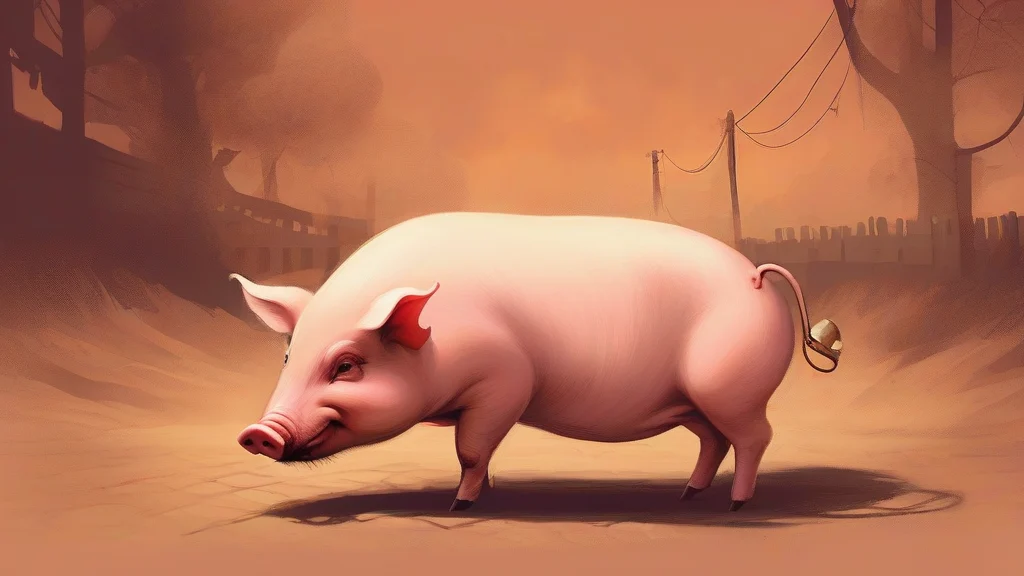
nounA porker is a pig raised for slaughter, especially a young or fattened pig. By extension, it is an offensive informal term for a fat person and can also characterize someone who eats excessively or greedily.
- A pig raised for slaughter, especially a young or fattened pig.
- An offensive informal term for a fat person.
- An informal term for a person who eats excessively or greedily.
"The farmer bought several young porkers to fatten for the market."
"The farmer bought several young porkers to fatten for the market."
"By the third helping, everyone was calling him a porker."
The regular plural is used for multiple animals and also for multiple people in the figurative senses.
"Several young porkers were grazing beside the barn."
A porker can mean the animal on the farm—and, less politely, the person hogging the buffet.
Reviewed by Deb Chak, Editor. AI-assisted content curated by RJS Tech Solutions LLP.
Etymology of porker
Porker was formed in English from "pork" and the suffix "-er," originally identifying a pig kept or raised for pork. The word is chiefly associated with livestock and remains especially common in British English. "Pork" comes through Old French "porc" from Latin "porcus"; related English forms such as "porcine" and "porcupine" also trace to the same Latin root.
Related word forms
How porker is actually used
The livestock sense is especially common in British English and is more precise than the neutral word "pig" because it identifies an animal intended for the pork market. The senses referring to people are informal and usually disparaging, suggesting fatness, greed, or excessive eating.
Easily confused with porker
Pork is the meat obtained from a pig, whereas a porker is the pig itself, especially one raised for slaughter.
A porker is a pig or a disparaging term for a person; a poker is a card game or a tool used for tending a fire.