
What does husbandmen mean?
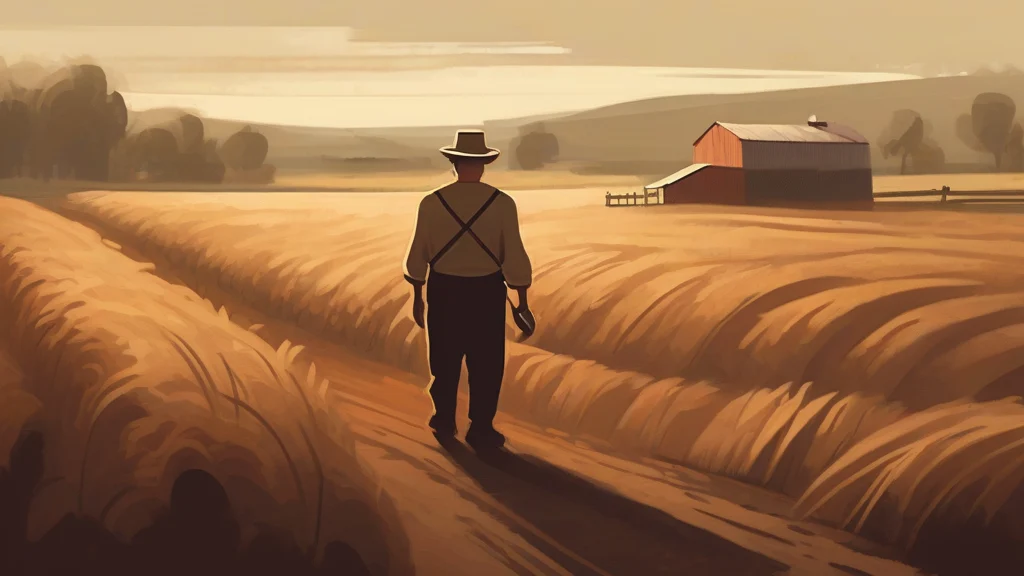
Husbandmen is the plural of husbandman, a word now chiefly associated with historical rural life. It denotes married men who worked in agriculture, particularly as tenant farmers, smallholders, or cultivators. In older writing, the term could also function simply as a label for farmers, although its long-established meaning included the idea of a man responsible for a household. The word frequently appears in estate records, local histories, legal documents, and literature describing village life, where it conveys the social position of people working the land and owing duties to a landowner. Today it is archaic rather than obsolete and may be understood from context even when it is unfamiliar. Husbandmen should not be confused with husbands: the latter refers generally to married men or to a man's spouse. The historical form helps convey the older structure of rural communities, in which occupation, household status, and legal obligations were closely connected.
noun (plural)The plural of husbandman, especially a married man engaged in farming or tenant agriculture.
- A married man engaged in farming, especially a smallholder or tenant farmer; now chiefly historical or archaic.
"The tenant husbandmen were expected to deliver a portion of their harvest to the landowner."
"Local records identify the householders and husbandmen responsible for maintaining the common fields."
"The novel depicts a village whose husbandmen endure difficult harvests and disputes over rent."
The headword is itself the standard plural; the singular is husbandman.
"Several husbandmen brought their grievances before the parish council."
Once a common label for a married farmer, husbandmen now survives mainly in old records, literature, and the occasional historical re-enactment.
Reviewed by Deb Chak, Editor. AI-assisted content curated by RJS Tech Solutions LLP.
Where does husbandmen come from?
The word combines husband and man, and ultimately derives from the Old Norse hūsbōndi, meaning the master or head of a household. Husbandman developed in Middle English and originally referred to a man engaged in husbandry, especially farming. The plural husbandmen has long been established, while husband continued to acquire the modern senses of a married man and a spouse.
Related word forms
How husbandmen is actually used
The word is archaic and literary in modern English. It may be encountered in historical documents, novels, and discussions of former agricultural communities. Historically, the term could denote a farmer or tenant farmer without always emphasizing that he was married, although its traditional sense commonly implied marriage.
Easily confused with husbandmen
Husbandmen traditionally referred to married men who worked as farmers or tenant farmers, whereas husbands simply means married men or refers to one's spouse.