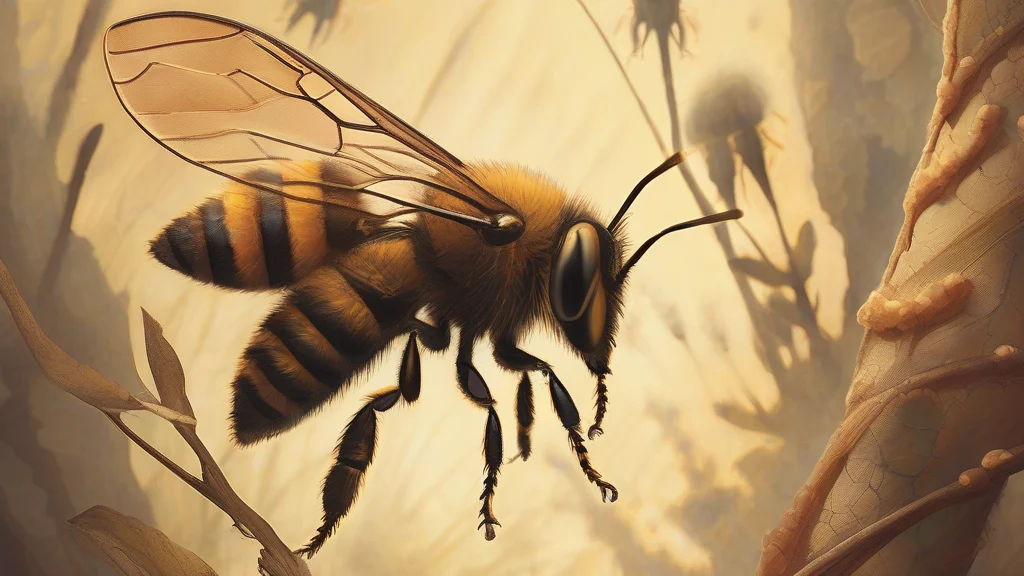
What does hymenopterous mean?
Hymenopterous refers to something that is related to or resembles hymenoptera, an order of insects that includes bees, wasps, and ants. This term is often used in scientific or academic contexts to describe insects or their characteristics. The word is derived from the Greek words 'hymen' and 'opter,' meaning 'membrane' and 'wing,' respectively. Hymenopterous insects are known for their distinctive body structure and behavior, which includes the use of their wings to fly and their stingers to defend themselves. The term is often used to describe the characteristics of these insects, such as their social behavior, communication methods, and nesting habits. In general, hymenopterous is a useful term for scientists and researchers who study these fascinating creatures.
adjectiveRelating to or resembling hymenoptera, an order of insects that includes bees, wasps, and ants.
- Relating to or resembling hymenoptera, an order of insects that includes bees, wasps, and ants.
"The hymenopterous insects in the garden were a nuisance to the gardeners."
"The hymenopterous insects in the garden were a nuisance to the gardeners."
"The hymenopterous characteristics of the wasp's body were fascinating to study."
Hymenopterous is an uncountable term and does not have a standard plural form.
Reviewed by Deb Chak, Editor. AI-assisted content curated by RJS Tech Solutions LLP.
Etymology of hymenopterous
The word 'hymenopterous' originated from the Greek words 'hymen' and 'opter,' meaning 'membrane' and 'wing,' respectively. This term was first used in the 17th century to describe the order of insects that includes bees, wasps, and ants. Over time, the term has been adopted in various languages and is now used in scientific and academic contexts to describe insects or their characteristics.
How hymenopterous is actually used
Hymenopterous is a formal or technical term, often used in scientific or academic contexts to describe insects or their characteristics.