
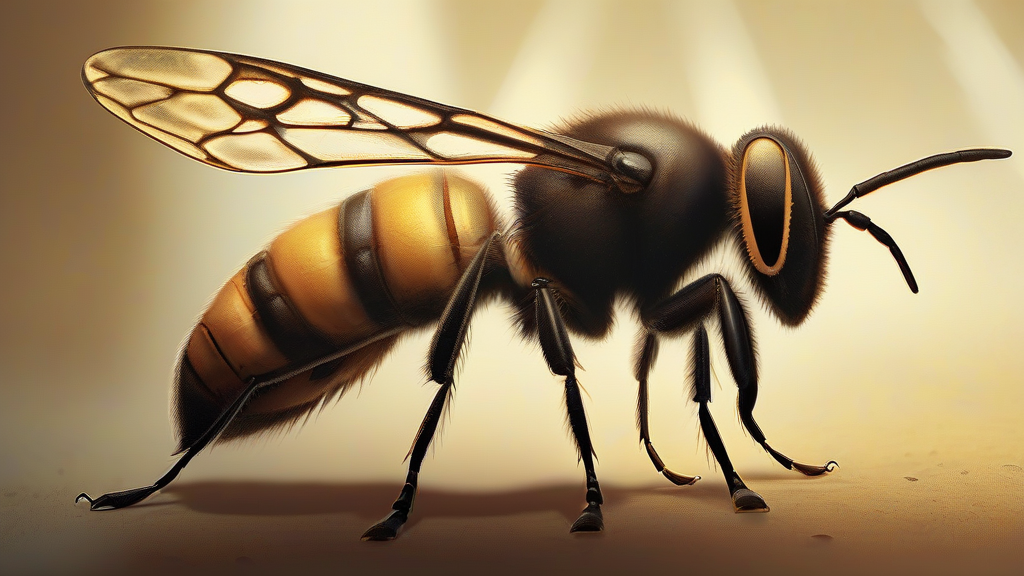
What does hymenopteron mean?
A hymenopteron is an individual insect belonging to the order Hymenoptera, a major group that includes bees, wasps, ants, sawflies, and many less familiar relatives. The term is used chiefly in entomology and taxonomy, where a precise singular noun can be useful; in general discussion, “hymenopteran” is more common and may function as either a noun or an adjective. Hymenopterans often have two pairs of membranous wings, though some species have reduced wings or wingless females, so wing structure alone does not define the entire group. The order includes thousands of species with widely differing habits, from social honeybees and paper wasps to solitary digger wasps and predatory sawflies. The word is useful when discussing the classification or biology of these insects without referring to a particular species, though ordinary readers will encounter names such as “bee” and “ant” much more often.
nounA member of the insect order Hymenoptera, including bees, wasps, ants, sawflies, and their relatives. The singular form is chiefly used in scientific and taxonomic contexts.
- Any insect belonging to the order Hymenoptera, including bees, wasps, ants, sawflies, and their relatives.
"The entomologist identified the unfamiliar hymenopteron as a species of solitary wasp."
"The hymenopteron landed on the wildflowers and remained still while the photographer adjusted the camera."
"Researchers used a key to determine whether the specimen was a hymenopteron or a fly."
The regular plural is hymenoptera, without an added suffix. The singular form is now chiefly encountered in scientific and taxonomic writing.
"Several hymenoptera were collected from the flowering shrubs."
The name combines the Greek words for “membrane” and “wing,” a fitting tribute to the delicate membranous wings that help define this vast insect order.
Reviewed by Deb Chak, Editor. AI-assisted content curated by RJS Tech Solutions LLP.
Etymology of hymenopteron
The word comes from New Latin, based on Greek humenōpteron, a compound formed from humēn, “membrane,” and pteron, “wing.” The name refers to the characteristic membranous wings of many members of the order. English later developed the related forms “hymenopteran” and “hymenopterous,” while the Greek combining form pteron, “wing,” also appears in names such as “dipteron” and “coleopteron.”
Related word forms
How hymenopteron is actually used
In modern scientific writing, “hymenopteran” is generally more common and flexible. “Hymenopteron” is retained when a singular taxonomic term is specifically required, especially in older entomological literature.
Easily confused with hymenopteron
A hymenopteron is an individual member of the order Hymenoptera, whereas hymenopteran can serve as either a noun for such an insect or an adjective describing it.