
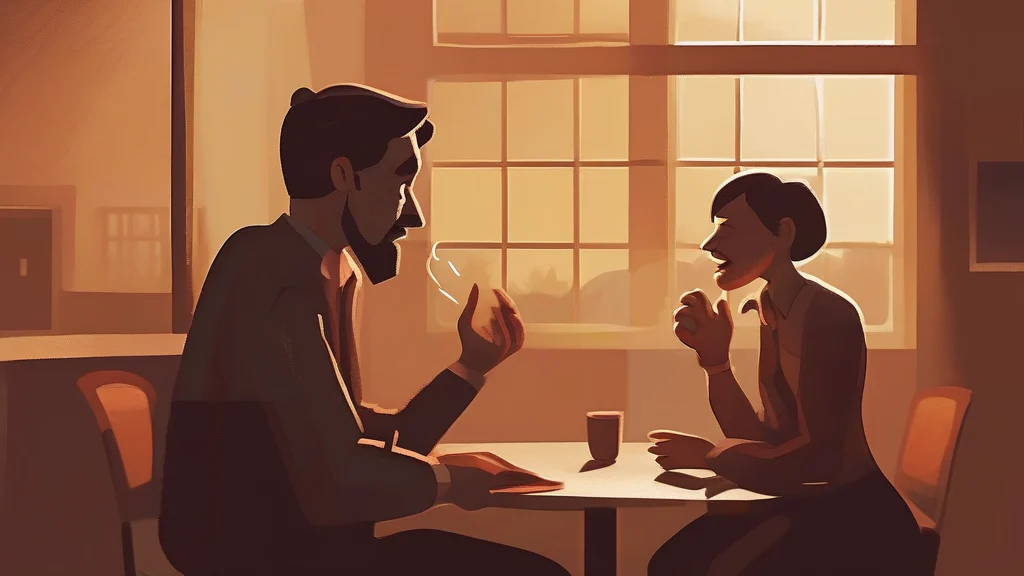
What does jabber mean?
To jabber is to talk rapidly and continuously, often with such excitement or agitation that the individual words are hard to distinguish. The expression is informal and commonly conveys annoyance, nervous energy, or an inability to communicate clearly, although it can also be used more playfully to describe enthusiastic chatter. As a noun, “jabber” means fast, confused, or excited talk; in older usage it can also denote a person who talks constantly. The verb is especially common in informal North American English, while related forms such as “jabbering” and “jabberer” are also readily understood. Although “jabber” is related in sound and meaning to words such as “jab,” it is not a variant of “jab”: the former describes a manner of speaking, whereas the latter can mean either a quick punch or, less commonly, a short sharp movement. The word is especially useful for describing speech that is abundant, animated, and somewhat unintelligible.
To speak rapidly and continuously, especially in an excited, agitated, or indistinct manner.
"The child jabbered excitedly about what he had seen at the zoo."
Informal; often suggests nervous excitement, annoyance, or speech that cannot easily be understood.
Rapid, excited, or confused talk; also, a person who talks in this way.
"We were treated to an hour of unintelligible jabber."
Most often used as an uncountable noun. The countable sense is comparatively rare.
The plural is possible but uncommon; “jabber” is ordinarily used as an uncountable noun.
"The two jabbers continued talking without pause."
From urgent phone calls to excited children, “jabber” captures speech that arrives faster than it can be understood.
Reviewed by Deb Chak, Editor. AI-assisted content curated by RJS Tech Solutions LLP.
Where does jabber come from?
Jabber developed from a verb meaning to talk or chatter that was in use by the early modern period. Its precise origin is uncertain, but it is associated with the same broad family of words meaning rapid, excited, or indistinct speech that includes “gabble” and “babble.” The present form became firmly established in informal English by the eighteenth century and was later famously echoed in Lewis Carroll's “Jabberwocky.”
Related word forms
How jabber is actually used
The word is informal and often mildly disparaging. It may suggest excitement, nervousness, anger, or speech that is difficult to follow.
Easily confused with jabber
A jab is a quick, directed punch or poke, whereas to jabber is to talk rapidly or continuously.