
What does jerky mean?
Jerky is an adjective describing movement, speech, or behavior that is abrupt, irregular, or slightly nervous. A jerky voice may crack or change suddenly, while jerky movements consist of quick, uncontrolled-looking stops and starts. The word can therefore carry either a physical description or a suggestion of anxiety and agitation. Jerky is also a noun for a dry, seasoned strip of meat, usually beef. In this food sense, it is commonly used with beef, as in beef jerky, and is often sold in pieces or packets. Although the two meanings are unrelated in ordinary usage, the adjective is especially useful when the precise quality matters: a movement or voice is not merely fast, but noticeably uneven or discontinuous.
Characterized by sudden, irregular, abrupt, or twitching movement; often also suggesting nervousness or agitation.
"A jerky hand reached for the phone and knocked over the glass."
Common in descriptions of movement, sound, speech, and behavior. The sense implying nervousness is informal and figurative.
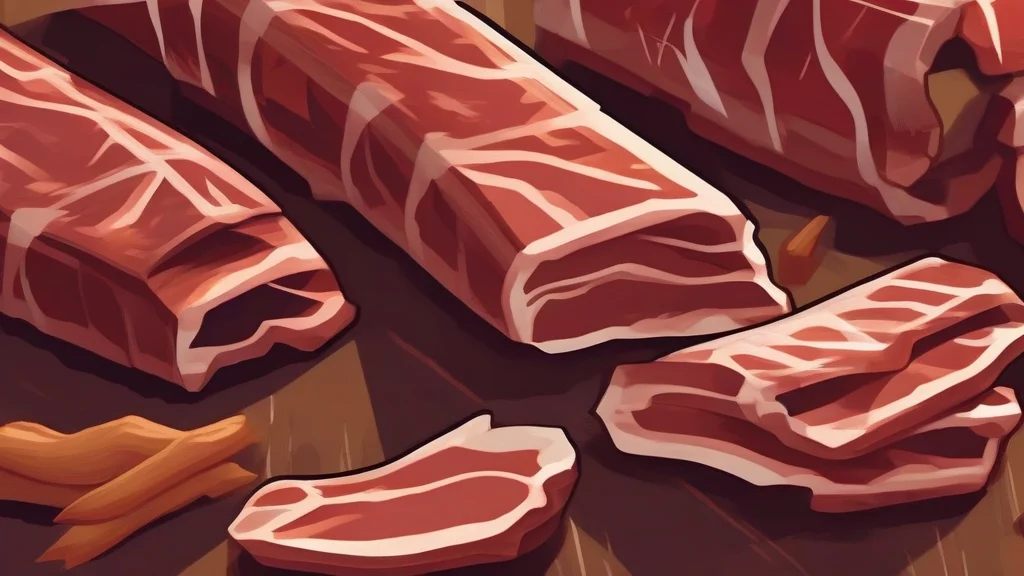
A dry, seasoned strip or shred of meat, usually beef, made by removing moisture and preserving the meat.
"She packed nuts, fruit, and some jerky for the hike."
Usually treated as a mass noun in the food sense, though “jerkies” is used when referring to individual pieces or varieties.
Usually used as a mass noun when referring to the food generally; the plural form is used for separate pieces or varieties.
"The shop sells several kinds of jerkies, including turkey and beef."
Jerky can describe both a nervous voice and a dried strip of meat—an unusually wide range of meanings for one little word.
Reviewed by Deb Chak, Editor. AI-assisted content curated by RJS Tech Solutions LLP.
Where does jerky come from?
The adjective jerky is formed from jerk, using the suffix -y, and follows the pattern of other English adjectives that describe a quality associated with a movement or sound. The origin of jerk itself is uncertain, although the word is well established for a sudden movement or pull. The food sense developed separately by referring to dried or tough strips of meat that can be pulled or torn into pieces. The exact historical sequence connecting the food terminology to the adjective is not clear.
Related word forms
How jerky is actually used
In its adjectival senses, the word often suggests abruptness, nervousness, or lack of smoothness. As a noun, it most often refers to dried meat, especially beef, and is usually treated as a mass noun; “jerkies” can be used for separate pieces or varieties.
Easily confused with jerky
A jerk is a sudden, often abrupt movement or a disparaging term for a person, while jerky usually describes something that moves, sounds, or changes in a twitching or irregular way.