
What does turkey mean?
Turkey most commonly names a large game bird related to pheasants and other grouse-like birds. It is native to North America and has been domesticated for food, although its name records an early mistaken belief that it came from the country now called Turkey. The word can also denote the bird's flesh, commonly served roasted, minced, or sandwiched; a whole turkey is a traditional centerpiece of Christmas meals in Britain and Thanksgiving meals in the United States. In informal, chiefly North American usage, calling someone a turkey suggests that the person is foolish, inept, or easily deceived. The expression carries a teasing but potentially insulting connotation and is unsuitable for formal or sensitive contexts. The ordinary plural for the bird is turkeys, while turkey used as a name for the meat is normally an uncountable noun.
nounA large game bird of the pheasant family, native to North America and raised in many countries for its meat. The flesh of this bird is also called turkey.
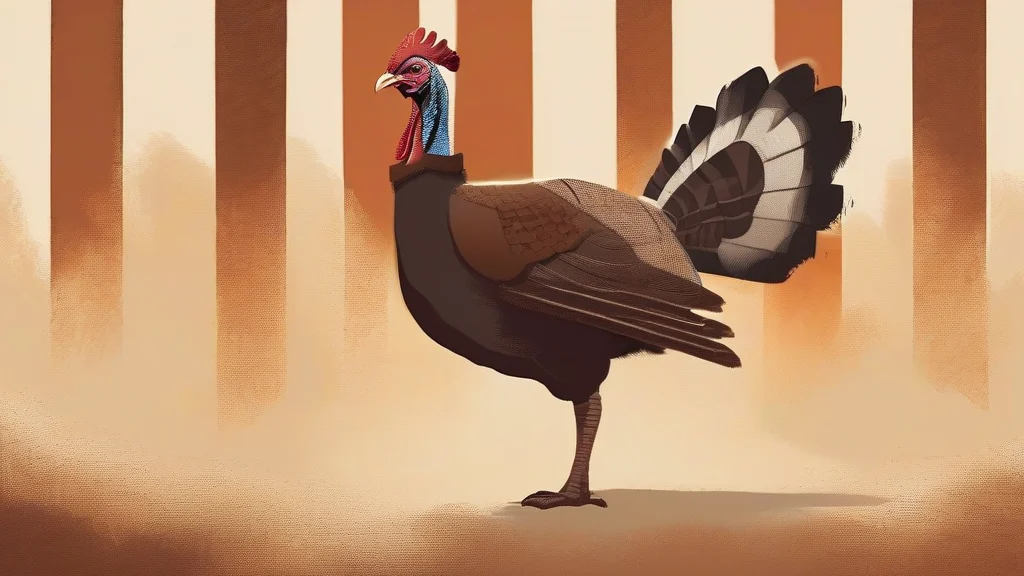
- A large North American game bird with a broad body, long neck, and fan-shaped tail, domesticated in many countries for meat.
- The flesh of a turkey, typically eaten roasted or ground.
- Informally, a stupid or easily deceived person.
"We served roast turkey with sage stuffing and cranberry sauce at the Thanksgiving dinner."
"Wild turkeys forage in the forest near the farm."
"He ordered a turkey sandwich with lettuce and tomato."
"I felt like a turkey for walking into that trap."
The plural turkeys refers to multiple birds. Turkey used for the meat is normally uncountable.
"The shop sells whole turkeys, turkey breasts, and turkey mince."
Despite its name, the turkey is native to North America—not Turkey.
Reviewed by Deb Chak, Editor. AI-assisted content curated by RJS Tech Solutions LLP.
Where does turkey come from?
The English name dates from the early 16th century and comes through French from a Turkish designation associated with Turkey. The bird was believed to originate there, although wild turkeys are native to the Americas. The same linguistic root underlies forms such as Turk, Turkish, Turkic, and the modern Turkish name Türkiye.
How turkey is actually used
The bird and its meat are familiar subjects of both British and American English, although turkey is strongly associated with Christmas dinner in Britain and Thanksgiving dinner in the United States. The personal sense is informal and derogatory, especially in North American English.
Easily confused with turkey
Turkey with a capital T names the country, while lowercase turkey names the bird, its meat, or, informally, a foolish person.