
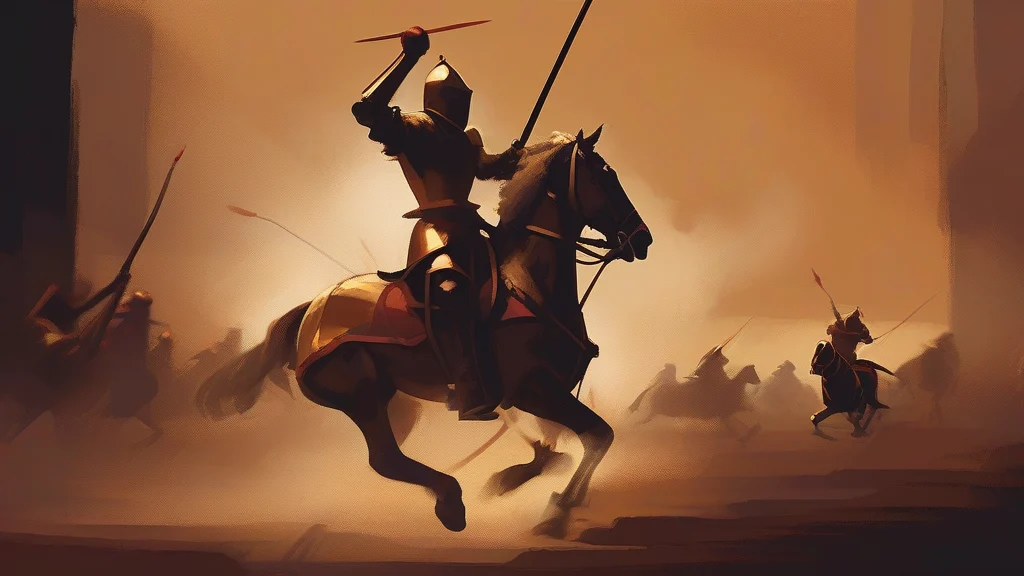
What does jousting mean?
Jousting is the activity of fighting on horseback with lances, particularly in the formal contests associated with medieval knights and tournaments. The term can refer either to the practice itself or to an individual contest or display, as in a historical pageant or theme-park performance. It is now more common in historical, literary, and ceremonial contexts than in descriptions of everyday life, though modern jousting events continue as organized sport and entertainment. The word carries associations with chivalry, heraldry, armor, pageantry, and the ceremonial culture of the medieval tournament. It is also related to joust, the corresponding verb, and jouster, a person who participates in a joust. Although jousting is normally treated as an uncountable activity, writers may use “joustings” in formal or literary contexts when referring to multiple separate displays.
nounThe sport or practice of two armed riders on horseback charging one another with lances. The word also refers more generally to a jousting contest or display.
- The practice of fighting on horseback with lances, especially between two knights in formal or ceremonial contests.
- A jousting match, tournament, or display.
"The medieval festival featured jousting, falconry, and other entertainments."
"The king watched the jousting from a covered gallery above the lists."
"The historical pageant included jousting and a mock battle between two teams of riders."
Jousting is generally used as an uncountable noun for the activity or a display. The plural “joustings” is possible but uncommon.
"The performers were skilled in jousting."
From a joust to a modern knight in armour takes only a few centuries—and a striking amount of specialized equipment.
Reviewed by Deb Chak, Editor. AI-assisted content curated by RJS Tech Solutions LLP.
Where does jousting come from?
The word is the present participle of joust, meaning to fight with lances on horseback. The vocabulary entered Middle English from Old French joster, whose meaning was similarly associated with combat using a lance or similar weapon. Related English forms include joust and jouster, while the shorter form just is historically connected through the same medieval French vocabulary.
Related word forms
How jousting is actually used
The word is chiefly historical, literary, or used in descriptions of medieval tournaments and pageantry. In modern contexts it often evokes ceremonial or staged displays rather than actual combat.
Easily confused with jousting
Jousting is a formal mounted combat with lances, whereas jostling means pushing or moving roughly in a crowd.