
What does jouster mean?
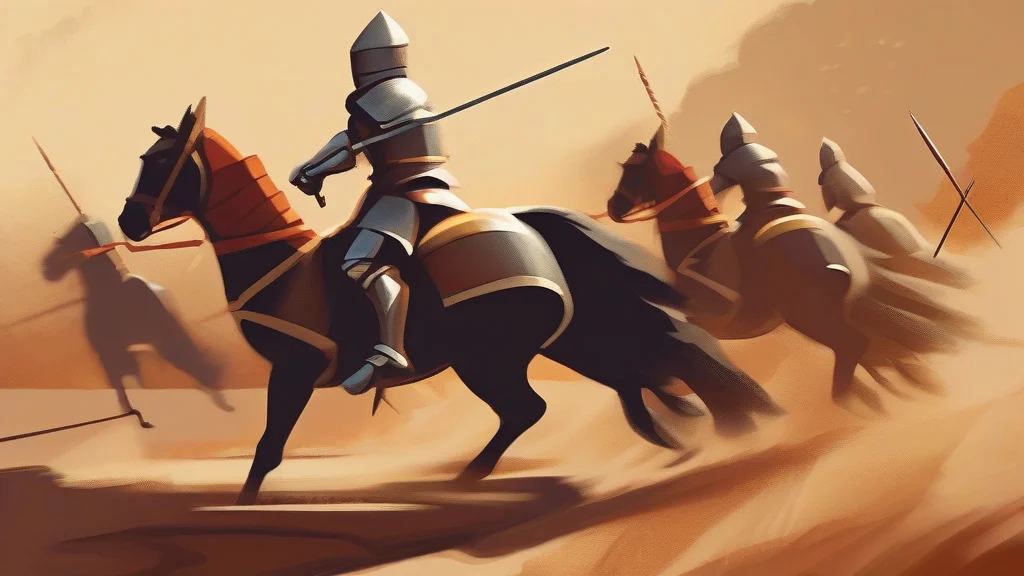
A jouster is a person who takes part in jousting, the formal or historical practice of riding at an opponent with a lance. The word is most closely associated with medieval tournaments, where mounted knights demonstrated horsemanship, courage, and military skill before spectators. It is also used for participants in modern historical pageants, reenactments, and organized jousting displays. In ordinary conversation, jouster is relatively uncommon, and the related noun joust usually refers to the contest or act itself rather than to the person participating. The distinction can be useful when discussing tournament records, heraldic traditions, and descriptions of famous knights. Although modern jousting is generally ceremonial or sporting, the historical form involved real armored riders and specialized equipment.
nounA person who participates in a joust, especially a knight or mounted participant in a medieval or modern tournament. The term can also refer generally to someone who engages in jousting.
- A person who jousts, especially a participant in a medieval tournament or historical jousting event.
"The jouster lowered his lance and charged across the tournament field."
"Each jouster approached the lists with a brightly decorated lance."
"The museum staged an exhibition featuring the equipment used by a famous sixteenth-century jouster."
The regular plural is used for multiple participants in a tournament or jousting event.
"The jousters lined up at opposite ends of the lists."
From the tournament arena to modern Renaissance fairs, a jouster made courage public: the spectacle was the charge, the clash, and the rider who held their seat.
Reviewed by Deb Chak, Editor. AI-assisted content curated by RJS Tech Solutions LLP.
Where does jouster come from?
The word comes through Middle English from Old French joster, meaning to fight with lances on horseback. This developed from Medieval Latin justare, a word associated with the Latin root iustus, meaning just or lawful, reflecting the formal rules governing such contests. The same broad Latin family is reflected in words such as justice, justify, adjust, and jury.
Related word forms
How jouster is actually used
The word is historically associated with mounted tournament combat and is now common in descriptions of medieval history, pageantry, and historical re-enactments. It is less common as a general term for a modern competitive lance rider.
Easily confused with jouster
A joust is the contest or act of fighting on horseback with lances, whereas a jouster is the person who takes part in it.
Jousting is a formal or staged contest with lances, while jostling means pushing or moving roughly in a crowd.