
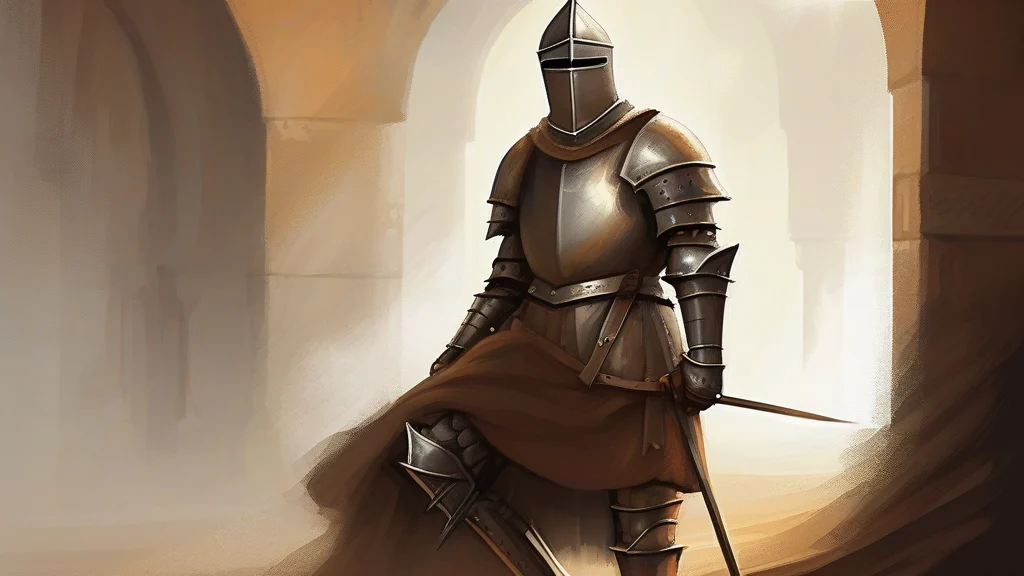
What does knight mean?
A knight is best known as a mounted warrior from the Middle Ages, typically associated with armor, chivalry, and feats of courage. In modern British and Commonwealth usage, it can also mean a person formally honored with a knighthood, regardless of military service. In chess, a knight is the piece that moves in an L-shape. Figuratively, describing someone as a knight suggests unusual integrity, bravery, or generosity, though the expression can sometimes sound deliberately old-fashioned. The word is now used primarily in historical, ceremonial, literary, and figurative contexts rather than for an ordinary mounted soldier. Its history is unusually broad: the term once referred to a young man or servant, gradually developed the meaning of a mounted warrior, and later supplied both a chess-piece name and a modern system of personal honor.
A member of a medieval military order who fought on horseback, traditionally wearing armor and bearing a sword.
"The museum displayed the armor of a medieval knight."
The historical sense is common in literature, folklore, museums, and discussions of medieval warfare.
A chess piece that moves in an L-shape and attacks the opposite color of square.
"The player moved the knight across the board and captured the bishop."
A man or woman formally granted the title of knight.
"She was made a knight for her charitable work."
This modern honorific sense is especially associated with British and Commonwealth institutions.
A person who displays exceptional courage, generosity, or moral character.
"He acted like a knight when he defended his neighbor."
This is a figurative and generally literary use, sometimes idealized or sentimental.
The standard plural is 'knights'; the plural can refer to multiple warriors, chess pieces, or people holding the modern title.
"Several knights attended the ceremony."
The word knight began by referring to a young man or servant before it came to mean a mounted warrior.
Reviewed by Deb Chak, Editor. AI-assisted content curated by RJS Tech Solutions LLP.
Where does knight come from?
The word descends from Old English cniht, originally meaning a boy or young man and also a servant. By the Middle English period, it had developed the meaning of a mounted military warrior. The word belongs to the Germanic family and is related to German Knecht and Dutch knecht, which also historically referred to servants or young men; the English sense of a mounted warrior developed independently through chivalric culture.
Related word forms
How knight is actually used
The historical and modern honorific senses are most common in British usage, though the word is used in English worldwide. The figurative sense is usually literary or complimentary. The verb is now largely archaic or historical.
Easily confused with knight
Knight refers to a mounted warrior or chess piece, whereas night is the period of darkness between sunset and sunrise.