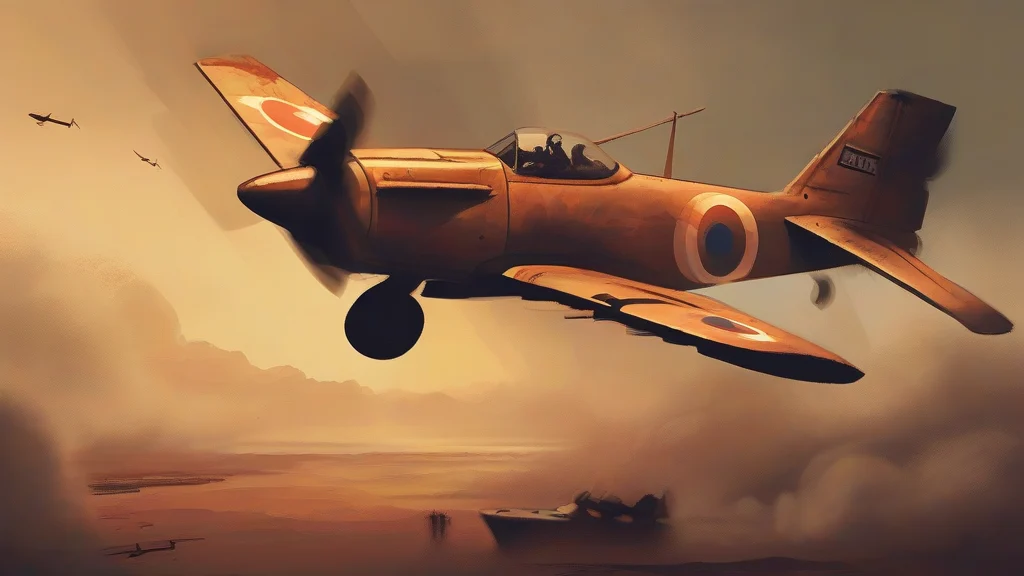
What does kamikaze mean?
Kamikaze refers to a person, typically a pilot, who deliberately crashes their vehicle into a target as a form of suicidal attack. The term originated in Japan and is associated with World War II, but it can also describe something or someone that is recklessly self-destructive. Kamikaze pilots were feared for their bravery and recklessness, but the term can also be used to describe a broader cultural or historical context. The usage of kamikaze can be sensitive due to its association with violence and self-sacrifice.
A person, especially a Japanese pilot, who deliberately crashes their vehicle, typically a plane, into a target, usually as a form of suicidal attack.
"The kamikaze pilot's actions were seen as a heroic sacrifice by some, but as a senseless act of violence by others."
Recklessly self-destructive or prone to taking extreme risks.
"Her kamikaze driving style made her friends nervous, but she always managed to avoid accidents."
The plural form is used to describe multiple individuals or instances of kamikaze behavior.
"The kamikazes of World War II were a feared and respected force."
Reviewed by Deb Chak, Editor. AI-assisted content curated by RJS Tech Solutions LLP.
Etymology of kamikaze
The term kamikaze originates from Japanese, literally meaning 'divine wind'. In Japanese history, the kamikaze was a mythical wind that destroyed the Mongol invasion fleet in the 13th century. During World War II, Japanese pilots who engaged in suicidal attacks against Allied forces were called kamikaze, taking on a new meaning that associated their actions with the mythical divine wind.
How kamikaze is actually used
The term kamikaze has a complex and nuanced history, and its usage can be sensitive. It is often associated with World War II and Japanese culture, but it can also be used more broadly to describe reckless or self-destructive behavior.