
What does lama mean?
Lama has two established and distinct senses. In its animal sense, it denotes a domesticated camelid native to the Andes, closely related to the alpaca and vicuña. Llamas have traditionally served as pack animals, transporting goods across mountainous terrain, and are also bred for their fibre. Although lama is an attested English spelling, llama is the standard modern form for this meaning. In its religious sense, a lama is a Tibetan Buddhist spiritual teacher, often identified with a particular lineage or understood as a reincarnation of an earlier master. This use is especially common in discussions of Tibetan Buddhism and Himalayan religious culture. The two senses share a pronunciation but have separate origins: the animal word is related to Spanish llama and ultimately to Quechua, whereas the religious term comes from Tibetan blama. Consequently, lama is especially useful for distinguishing context-sensitive usage from the more familiar spelling llama.
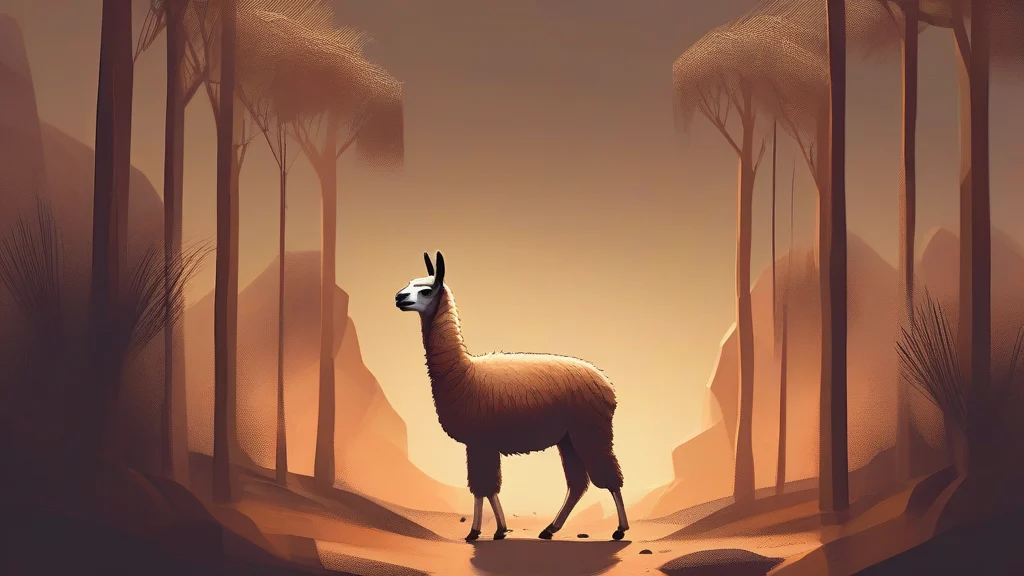
A large domesticated South American camelid, traditionally used as a pack animal and bred for its wool.
"Each lama carried a carefully balanced load."
This spelling is less common than llama in modern English, though both are attested.
A Tibetan Buddhist spiritual teacher, especially one associated with a lineage or regarded as a reincarnation of a notable master.
"The lama taught meditation to the assembled students."
This sense is chiefly associated with Tibetan Buddhism and Himalayan religious culture.
Both senses are regularly counted nouns. The plural is lamas; in the religious sense, it is also commonly pronounced with a final voiced consonant in careful speech.
"Two lamas led the group through the mountain pass."
One word can name both a celebrated Andean pack animal and a Tibetan Buddhist teacher.
Reviewed by Deb Chak, Editor. AI-assisted content curated by RJS Tech Solutions LLP.
Where does lama come from?
The animal sense of lama is a spelling variant associated with Spanish llama, which ultimately derives from a Quechua term for the domesticated Andean camelid. The religious sense comes from Tibetan blama, the designation for a Buddhist spiritual teacher, and entered English through encounters with Tibetan and Himalayan religious traditions. The convergence of these two unrelated origins in one English word makes lama notable despite the continuing preference for llama in ordinary animal-related usage.
Related word forms
How lama is actually used
In contemporary English, llama is far more common for the animal. Lama is most frequently encountered in the religious sense, especially in references to Tibetan Buddhism. The two meanings are unrelated in origin.
Easily confused with lama
A lama may refer to the animal, although llama is the usual modern English spelling; lama is also an established term for a Tibetan Buddhist spiritual teacher.